SEO for Tutoring Businesses: Rank Higher on Google
SEO brings steady traffic from parents and students who are actively searching for tutors like you. Instead of paying for ads every month or hoping word-of-mouth brings enough students, SEO puts your tutoring business in front of people at the exact moment they're looking for help.
Yes, it does take time for SEO to start bringing results. But the best part is, once you rank on Google, that traffic works for you 24/7 non-stop. It's sustainable, predictable, and brings highly qualified leads who are ready to book.
But here's the problem: most tutors either don't understand SEO or don’t have the time to invest in SEO strategies for their tutoring businesses. Hence, their tutoring websites are invisible to Google.
Hi, I am Abdur, founder of Mabit Web Studio. For the past three years, I've been helping education businesses grow with conversion-focused websites and effective marketing strategies.
In this guide, I'll walk you through practical SEO strategies for tutoring businesses, including Keyword Research, On-Page SEO, Technical SEO Basics & Local SEO. You'll learn how to rank higher on Google and attract more students for your tutoring business.
Table of Contents
Why SEO Matters for Tutoring Businesses
When parents need a tutor for their child, where do they go first? Google and also LLMs like ChatGPT.
They search "SAT prep tutor near me," "online algebra tutor," or "chemistry tutoring for high school." If your website doesn't show up on the first page, you don't exist to them.
Here's the reality: 75% of people never scroll past the first page of search results. If you're not ranking on page one, you're missing out on the majority of potential students.
Parents and students search for tutors in specific ways:
- Subject + tutor + location: "math tutor in Austin"
- Subject + tutoring + online: "online chemistry tutoring"
- Problem-based searches: "help with SAT math," "struggling with algebra"
- Question-based searches: "how to improve SAT scores," "best way to learn Spanish"
If your website content matches these search queries, Google shows your site to the right people at the right time. You may ask: ‘What about ChatGPT ranking your content?’
SEO actually works the same way for LLMs, too. To rank in ChatGPT first, you need to optimize your website for Google. The fundamentals of SEO haven’t changed despite what the trend and influencers say.
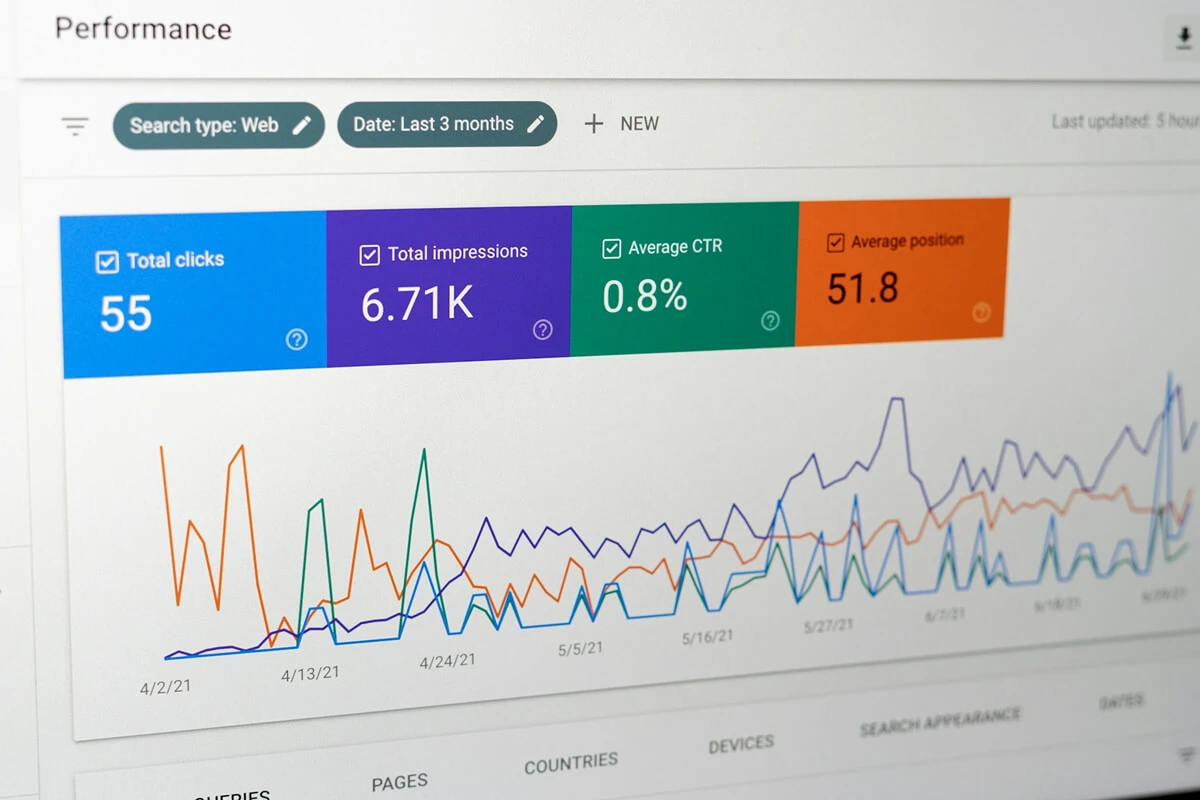
Here’s a quick analysis that will sum up the benefits of SEO for tutoring businesses:
Let’s say a keyword gets around 500 monthly searches. If you rank in the top spot, you can get 30-40% of that traffic, which is 150 to 200 visitors per month. With a 2-5% conversion rate, that’s 3-10 new student inquiries monthly on autopilot. That’s just from one keyword; the goal is to rank for multiple related keywords.
Before we head into the SEO Strategies, I have to mention: SEO takes time, effort, and money. It’s not FREE as some claim. You have to invest in writing blogs, creating pages to target keywords, and running backlink campaigns.
It takes anywhere from 4 to 12 months to start getting traction from Google, based on your niche and competition. But once traffic starts to build, that’s just the beginning!
I wrote a comprehensive guide on How SEO Helps Your Tutoring Business Grow with detailed explanations and real examples. If you want to dive deeper into why SEO matters specifically for tutors, check it out.
Core Pillars of SEO for Tutors
SEO is not just one task, it’s an entire system. Here are the five pillars that work together to rank your tutoring website higher on Google:
1. Keyword Research
Understanding what your ideal students are searching for and optimizing your content around those keywords. This is the foundation of everything else.
2. On-Page SEO
Optimizing individual pages on your website (titles, meta descriptions, headers, content) to rank for specific keywords and provide value to visitors.
3. Technical SEO
Making sure your website is fast, mobile-friendly, secure, and easy for Google to crawl and index. Technical issues can kill your rankings even if your content is great.
4. Content & Blogging
Creating valuable, SEO-optimized content (blog articles, guides, resources) that answers questions your ideal students are asking. Content builds authority and brings organic traffic.
5. Backlinks & Reviews
Earning links from other reputable websites and collecting positive reviews. These signals tell Google that your tutoring business is credible and trustworthy.
All five pillars work together. Ignore one, and your SEO suffers. Master all five, and you'll rank consistently and attract students without paid ads.
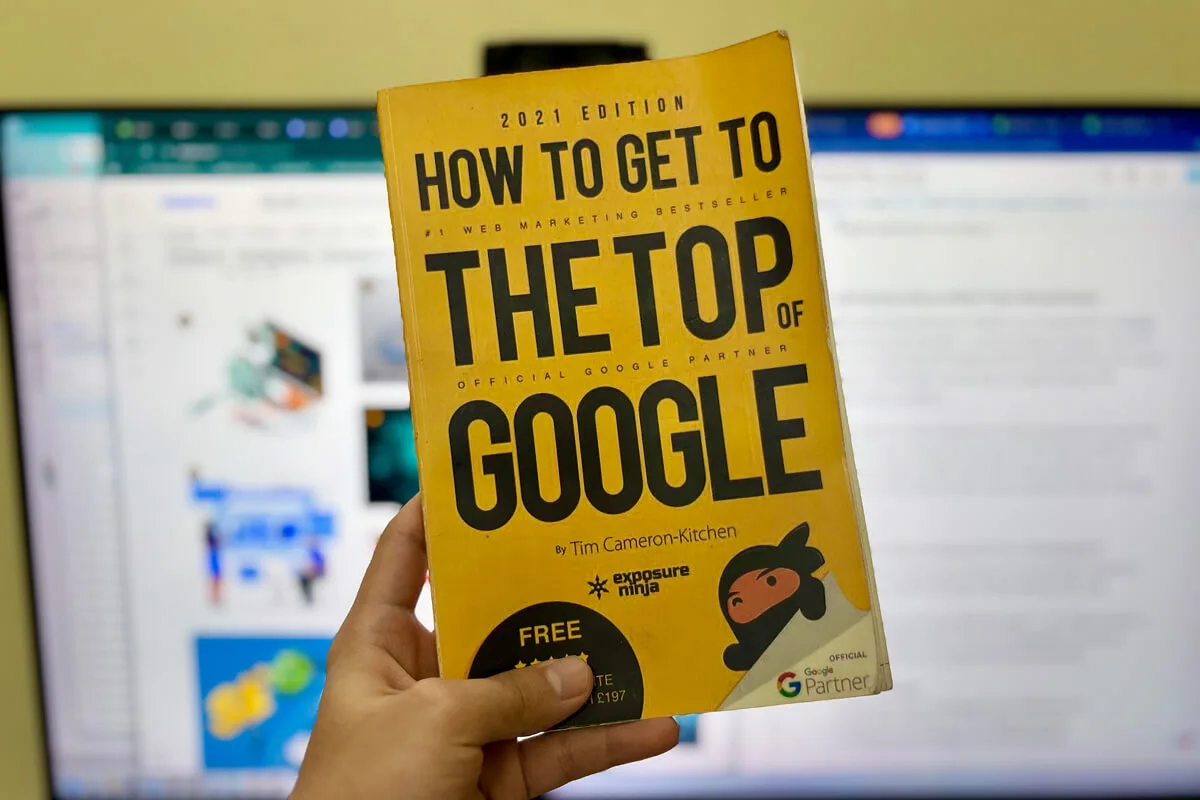
If you're looking to grow your tutoring business online, learning the basics of SEO is going to help you tremendously in your content creation journey. I recommend reading “How to Get to the Top of Google" by Tim Cameron-Kitchen - it's an excellent practical guide for business owners.
Keyword Research for Tutoring Businesses
Keyword research is the foundation of SEO. It tells you exactly what words and phrases your ideal students are searching for on Google.
If you build your website without keyword research, you're guessing. You might create pages about topics no one searches for, which means no traffic and no students.
Types of Keywords to Target
1. Primary keywords are your main services.
These are broad terms like "online math tutor," "Spanish tutoring," or "test prep services." They have high search volume but also high competition.
2. Location-based keywords matter if you serve local students.
Examples: "math tutor in Austin," "chemistry tutor near me," or "SAT prep in Los Angeles." These keywords have lower competition and attract students in your area.
3. Long-tail keywords are specific phrases that target particular student problems.
Examples: "how to improve SAT math score," "algebra help for struggling students," or "conversational Spanish practice online." These have lower search volume but higher intent, people searching these phrases are closer to booking.
4. Question-based keywords are perfect for blog content.
Examples: "how to study for chemistry exams," "what is the best way to learn Spanish," or "how long does SAT prep take." Answer these questions in blog articles to attract organic traffic.
Keyword Research Process
1. Tools to use:
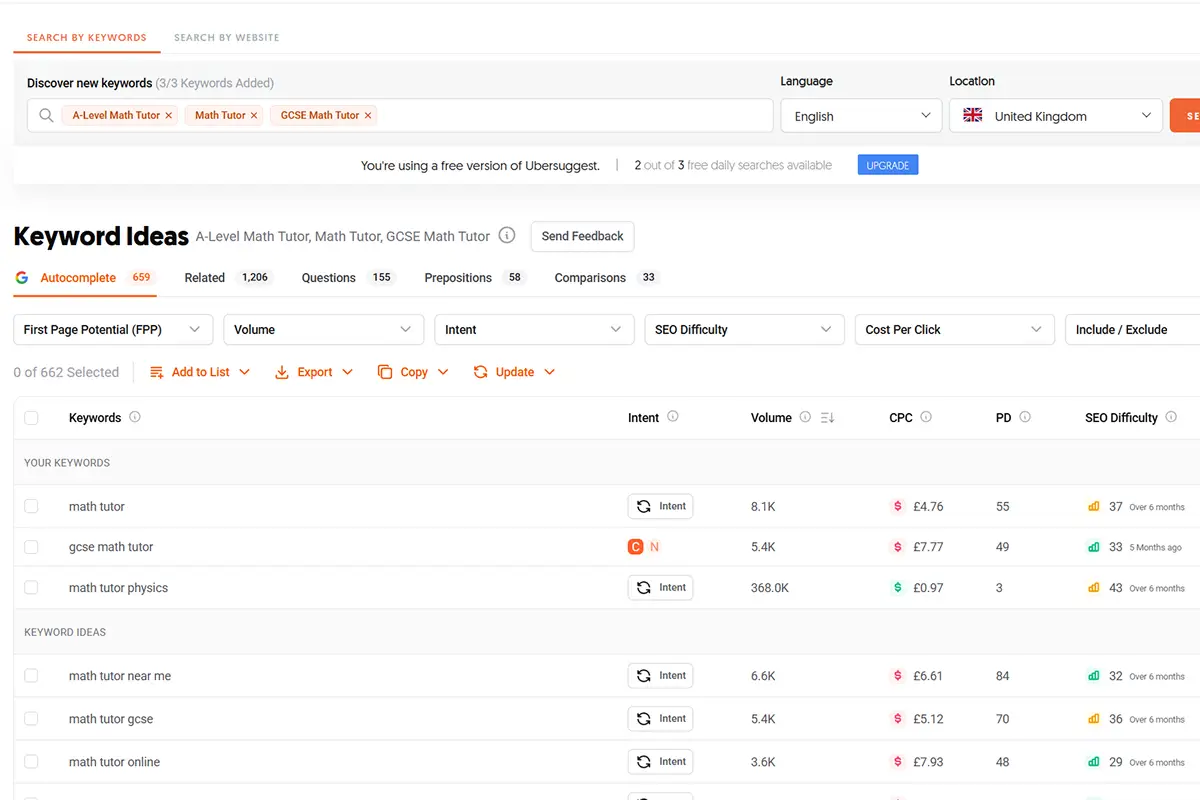
SEMrush, Ahrefs, and other professional SEO tools are powerful but expensive (often $100- 300). Ubersuggest is a budget-friendly option, and it’s helpful for beginners and tutors focused on content creation.
If you're building your tutoring website yourself and watching your budget, start with Google Keyword Planner - it's free and provides solid data for beginners.
Here’s a tutorial video on How to Use Google Keyword Planner for SEO for Free.
2. Analyzing search volume vs. competition:
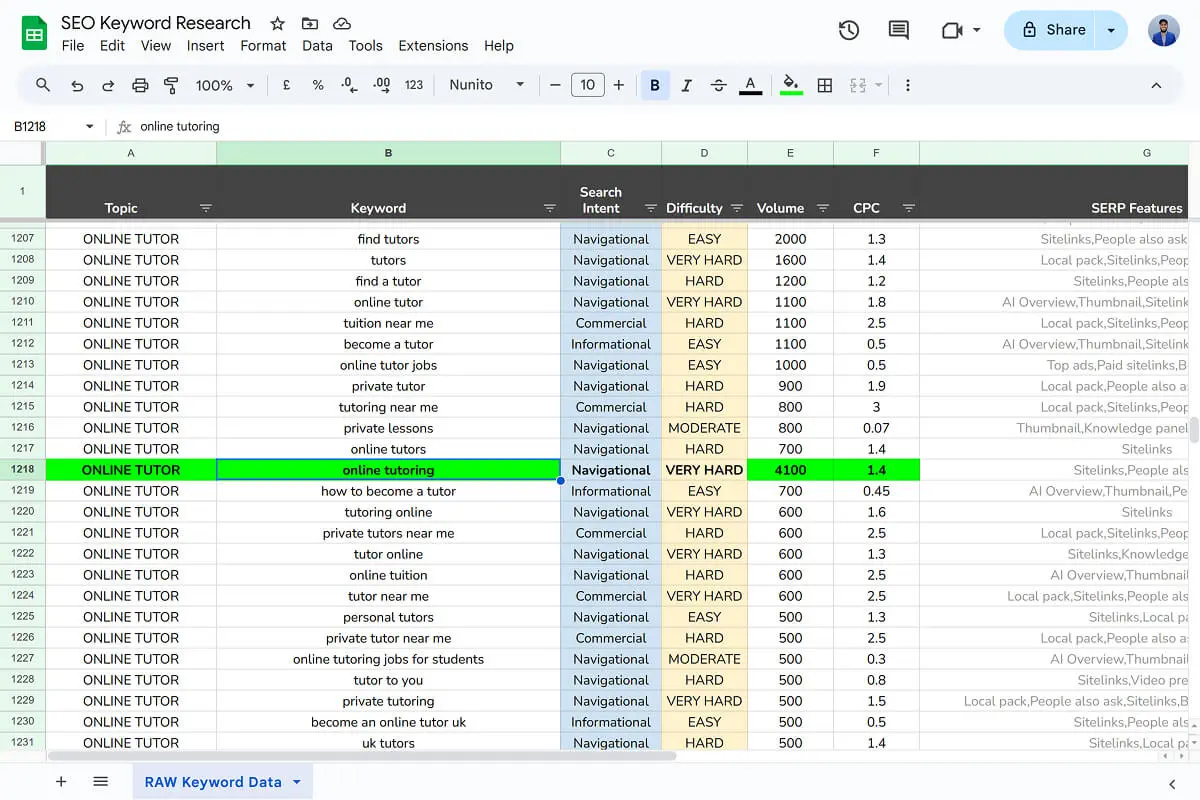
Look for keywords with decent search volume (at least 100-500 monthly searches) but low to medium competition. High-volume, high-competition keywords are difficult to rank for when you're just starting.
3. Understanding search intent:
What does the searcher want? Informational intent (learning something), navigational intent (finding a specific website), or transactional intent (ready to book/buy). Focus on transactional and informational keywords that lead to bookings.
4. Competitor keyword analysis:
Look at what keywords your direct competitors are ranking for. Tools like Ubersuggest or even manual Google searches can reveal what's working in your niche.
Organizing Keywords by Page/Section
Once you have your keyword list, assign them to specific pages. This ensures each page targets relevant search terms.
- Homepage keywords: Your main service + location (if local). Example: "online chemistry tutor" or "math tutoring in Chicago."
- Service page keywords: Specific services. Each service page should target its own keywords. Example: Your SAT prep page targets "SAT tutoring," "SAT prep course," "improve SAT scores."
- About page keywords: Your name, credentials, and teaching philosophy. Less about SEO, more about brand.
- Blog content keywords: Question-based and long-tail keywords. Each article targets a specific keyword phrase.
For a complete technical guide on keyword research, including a video tutorial on how to use Google Keyword Planner for free, check out my comprehensive article: How to Build a Website For Your Tutoring Business. I walk through the entire process step-by-step in the Development Phase section.
On-Page SEO for Tutoring Websites
On-page SEO is optimizing individual pages on your website to rank higher and provide value to visitors. Here's what matters:
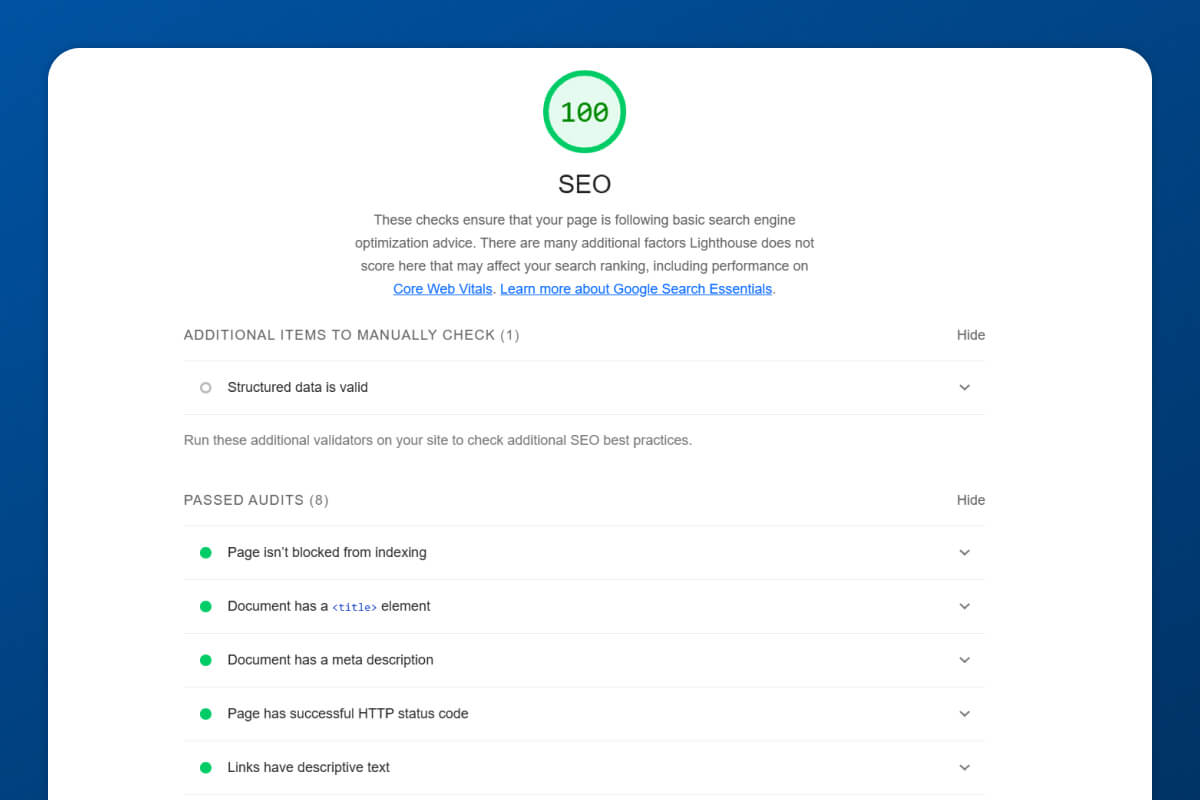
Optimizing Page Titles and Meta Descriptions
Page titles (the clickable headline in search results) should be under 55 characters and include your target keyword naturally.
Good example: "English Language Tutoring for non-native speakers in the UK"
Bad example: "Welcome to Eternal English, learn english with our holistic approach…"
Meta descriptions (the snippet under the title) should be under 155 characters, include 2-3 variations of your main keyword, and entice people to click.
Good example: "Helping non-native speakers thrive in the UK with language improvement, communication enhancement, and culture support. Book a free consultation"
Bad example: "We offer english tutoring services for students..."
Every page needs a unique title and description. Don't copy-paste the same text across all pages.
Using Heading Structure with Natural Keyword Placement
Your page should have one H1 tag (the main headline). This is usually your page title and should include your target keyword.
Use H2 tags for major sections. These should also include keywords naturally but not be stuffed awkwardly.
Use H3 tags for subsections under H2s.
Example structure:
- H1: Online Math Tutor for High School Students
- H2: SAT Math Prep
- H3: What's Included in SAT Math Tutoring
- H3: How SAT Math Prep Works
- H2: Algebra Tutoring
- H3: Topics Covered in Algebra Tutoring
This structure helps Google understand your content and makes it scannable for readers.
Writing Clear, Scannable Content
People skim, not read. Break your content into short paragraphs (2-4 sentences max), use bullet points for lists, and highlight key information with bold text.
Include your target keyword naturally in:
- The first 100 words of the page
- At least one H2 heading
- Throughout the content (but not stuffed awkwardly)
- The final paragraph or call-to-action
Adding Alt Text to Images and Internal Links
Every image on your website needs alt text (alternative text). This describes what's in the image for visually impaired users and helps Google understand your content.
Good alt text: "High school student working with online math tutor on SAT prep"
Bad alt text: "IMG_1234" or "photo"
Quick Note: Name your images with hyphens, aligned with the ALT.
For Example: high-school-student-working-with-online-math-tutor.webp
Internal links connect your pages. Link from blog articles to your service pages. Link from your homepage to important pages. This helps SEO and keeps visitors engaged.
Technical SEO Basics for Tutors
Technical SEO ensures your website is fast, mobile-friendly, and easy for Google to crawl. Even great content won't rank if your technical SEO is broken.
1. Mobile-First, Fast-Loading Pages
Over 60-70% of searches happen on mobile devices. Google prioritizes mobile-friendly websites. Test your site on your phone, if it's hard to read or navigate, you'll lose visitors and rankings.
Page speed matters. If your site takes more than 3 seconds to load, people leave. Google penalizes slow sites. Use tools like Google PageSpeed Insights to test your speed.
Quick speed optimization tips:
- Compress images into smaller size and turn them into webp format (use tools like TinyPNG)
- Enable caching
- Minimize plugins (remove unnecessary ones)
- Use a fast hosting provider (Recommend Hostinger)
2. HTTPS and SSL Security
Your website needs HTTPS (the padlock icon in the browser). This encrypts data and tells visitors your site is secure. Google penalizes sites without SSL.
Most hosting providers include free SSL certificates. If yours doesn't, use Let's Encrypt (free).
3, Clean URL Structure and Site Architecture
Your URLs should be clean and descriptive, not cluttered with numbers or random characters.
Good URL: yoursite.com/sat-math-tutoring
Bad URL: yoursite.com/page-id=12345?ref=abc
Keep your site architecture simple:
- Homepage
- Services/Subjects
- Math Tutoring
- Gcse Maths
- A-Level Maths
- University Maths
- English Tutoring
- Math Tutoring
- Blogs
- About Us
4. XML Sitemap and Robots.txt
An XML sitemap is a file that lists all your pages and helps Google find and index them. Most website platforms (WordPress, Webflow, Wix) generate sitemaps automatically. Submit your sitemap to Google Search Console.
A robots.txt file tells search engines which pages to crawl and which to ignore. Don't block important pages by accident.
Local SEO for Tutors
If you serve local students (in-person or specific cities), local SEO is critical. It helps you show up when parents search "math tutor near me" or "chemistry tutor in [city]."
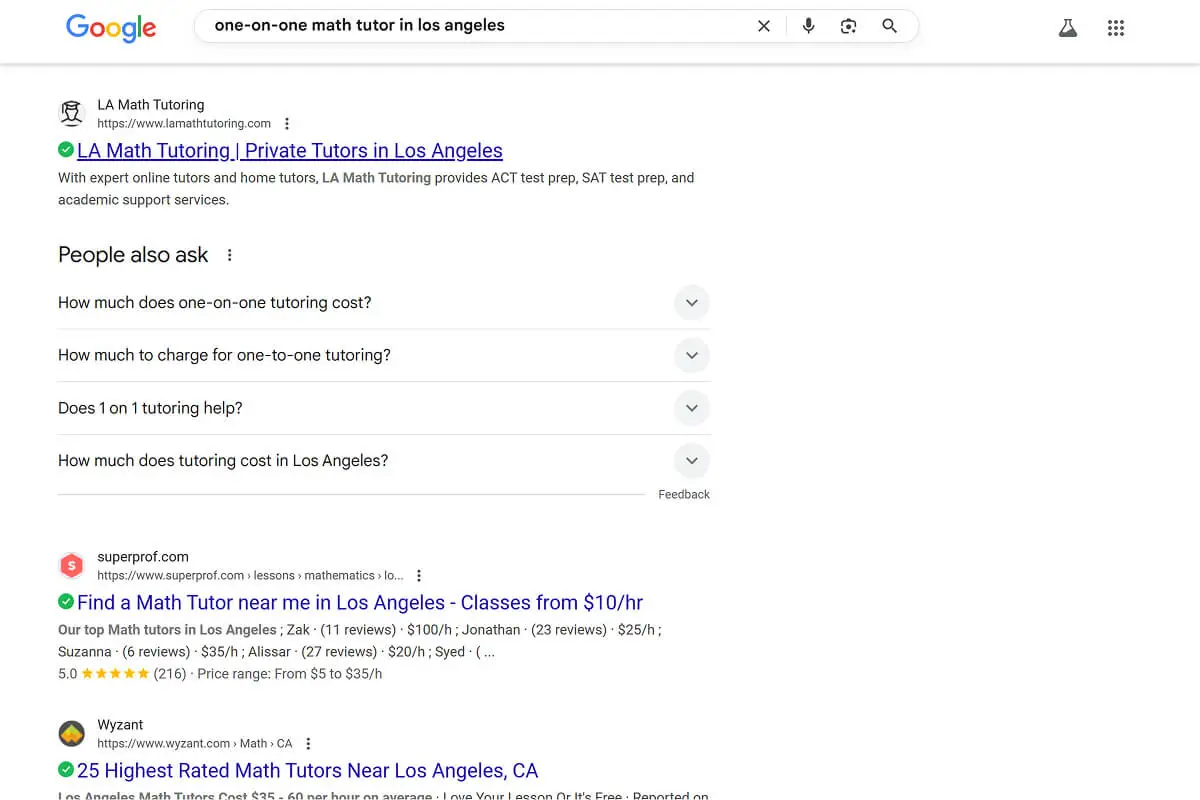
1. Setting Up and Optimizing Google Business Profile
Create a Google Business Profile (formerly Google My Business) for your tutoring business. This makes you show up in local search results and Google Maps.
How to optimize your profile:
- Add accurate business name, address, and phone number
- Choose the right category ("Tutoring Service" or "Private Tutor")
- Upload high-quality photos of yourself or your tutoring space
- Write a compelling business description with keywords
- Add your service areas (cities you serve)
Ask students and parents to leave reviews on your Google profile. More reviews = higher local rankings.
2. Creating Location-Based Service Pages
If you serve multiple cities, create a dedicated page for each location.
Example: Instead of one generic "Tutoring Services" page, create:
- "SAT Prep Tutor in Austin, TX"
- "SAT Prep Tutor in Dallas, TX"
- "SAT Prep Tutor in Houston, TX"
Each page should include location-specific content, testimonials from students in that area, and local keywords.
3. Encouraging and Managing Reviews
Reviews are trust signals. The more positive reviews you have, the higher you rank locally and the more parents trust you.
How to get more reviews:
- Ask satisfied students or parents directly (after successful sessions or results)
- Send a follow-up email with a link to your Google profile
- Make it easy (provide direct links, not instructions)
- Always respond to reviews, both positive and negative. Thank people for positive reviews and address concerns professionally in negative ones.
Quick Note: User-generated content (UGC): reviews, testimonials, social posts, blogs, and videos, is becoming a key trust signal in both traditional SEO and AI-powered search. The more your audience talks about you online, the more likely search engines and AI assistants are to recognize and surface your business.
While reviews alone don’t guarantee higher rankings, consistent UGC across platforms strengthens your visibility and credibility.
4. NAP Consistency (Name, Address, Phone)
Your business name, address, and phone number should be exactly the same across all platforms: your website, Google Business Profile, social media, directories, etc.
Inconsistent information confuses Google and hurts your local rankings.
Content Strategy for Tutoring SEO
Blogging is one of the most powerful SEO strategies for tutors. Every article you publish is a new opportunity to rank for keywords and attract students.
1. Why Blogging Matters for Tutors
- Authority: Blog content positions you as an expert. When parents see you writing helpful guides, they trust your expertise.
- Traffic: Every article targets different keywords, bringing new visitors from Google.
- Long-term results: Articles you write today will bring students months or years from now.

2. Topic Ideas for Tutoring Blogs
Write about what your ideal students are searching for:
- Exam tips:
- "How to Study for the SAT: A Complete Guide"
- "Top 10 SAT Math Mistakes and How to Avoid Them"
- "Chemistry Exam Study Tips for High School Students"
- Study strategies:
- "How to Improve Your Algebra Skills in 30 Days"
- "The Best Way to Learn Spanish Conversation"
- "How to Stay Focused While Studying Online"
- Subject-specific guides:
- "SAT Math Formulas You Need to Memorize"
- "Common Grammar Mistakes in Spanish (And How to Fix Them)"
- "Balancing Chemical Equations: Step-by-Step Guide"
Answer questions your students ask you in sessions. Those same questions are being searched on Google.
Use tools like Ubersuggest, AlsoAsked, AnswerThePublic to find questions your audience is searching for.
3. How to Structure SEO-Friendly Blog Posts
- Headline: Include your target keyword. Make it compelling and clear. Example: "How to Improve Your SAT Math Score: 7 Proven Strategies"
- Introduction: Hook the reader and promise value. Include your keyword in the first 100 words.
- H2 sections: Break content into clear sections with descriptive subheadings.
- Keyword placement: Use your keyword naturally in headings and throughout the content (don't stuff).
- Conclusion: Summarize key takeaways and include a call-to-action (book a session, download a guide, etc.).
4. Repurposing Blog Content
Don't write a blog post and forget about it. Repurpose it into:
- LinkedIn posts (break the article into 5-10 short posts)
- Social media graphics (pull key quotes or tips)
- Email newsletters (send one article per week to your list)
- Lead magnets (turn a popular article into a downloadable PDF guide)
One article becomes 10+ pieces of content across multiple platforms.
Building Backlinks and Trust Signals
Backlinks are links from other websites pointing to yours. They're like votes of confidence. The more high-quality backlinks you have, the more Google trusts your site and the higher you rank.
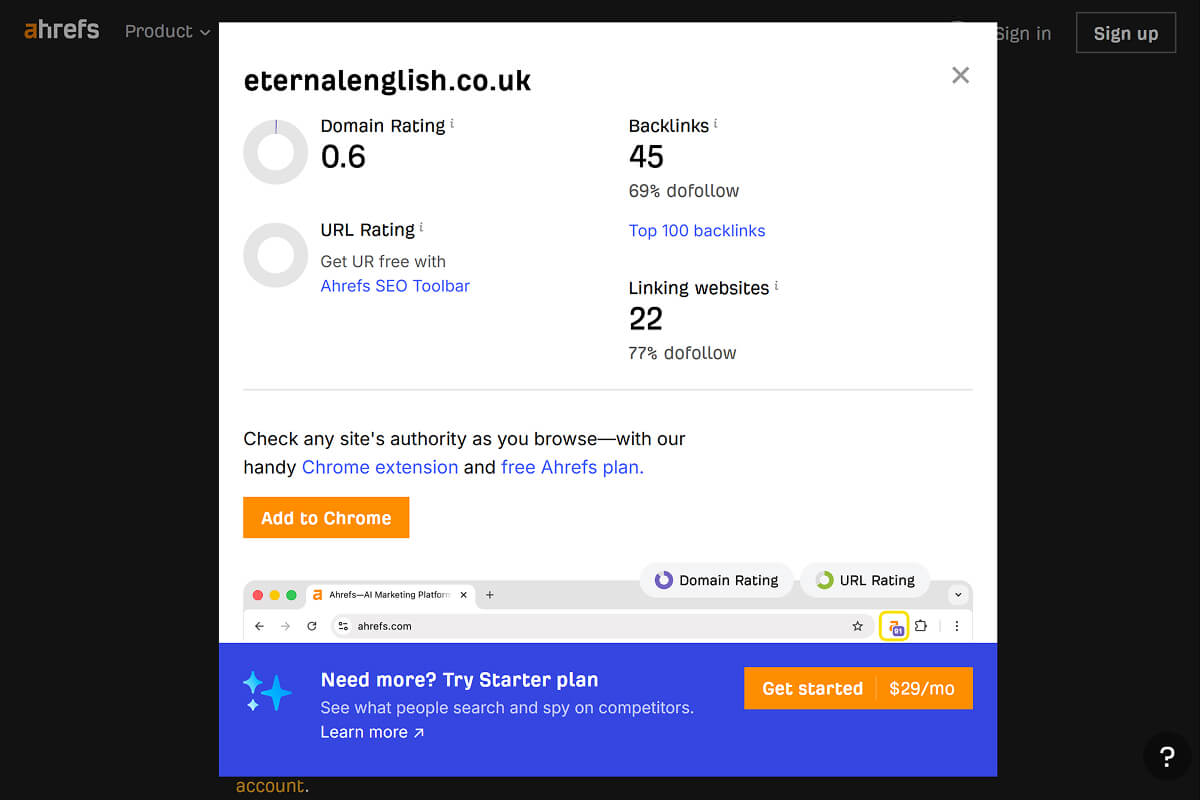
1. What Backlinks Are and Why They Matter?
When another website links to your tutoring site, it signals to Google: "This content is valuable and credible."
Not all backlinks are equal. A link from a reputable education blog is worth far more than a link from a random low-quality site.
Backlinks improve:
- Domain authority (Google's measure of your site's trustworthiness)
- Search rankings (higher authority = higher rankings)
- Referral traffic (people click the link and visit your site)
2. Simple Ways Tutors Can Earn Links
- Guest posting: Write articles for education blogs, parenting sites, or local news sites. Include a link back to your tutoring website in your author bio.
- Collaborations: Partner with complementary businesses (schools, learning centers, college counselors) and link to each other's sites.
- Local directories: Add your tutoring business to directories like Yelp, Thumbtack, Tutors.com, and local business listings.
- Create shareable resources: Write comprehensive guides, create free worksheets, or publish research. When your content is helpful, people naturally link to it.
- Reach out to bloggers and educators: If you publish something valuable, email bloggers or educators in your niche and let them know. They might link to it in their own content.
Please Avoid This: Buying links or using spammy link-building services. These can get your site penalized by Google.
3. Using Testimonials, Case Studies, and Social Proof
Trust signals aren't just backlinks. They're also:
- Student testimonials (display on your homepage and service pages)
- Case studies (before/after stories with specific results)
- Reviews on Google, Yelp, or Facebook
- Media mentions (featured in local news, podcasts, or education blogs)
These signals tell visitors and Google that you're credible and trustworthy.
Tracking SEO Results for Tutoring Businesses
You can't improve what you don't measure. Tracking your SEO performance tells you what's working and what needs adjustment.
1. Setting Up Google Analytics and Google Search Console
Google Analytics tracks how many people visit your site, where they come from, what pages they view, and how long they stay. It's free and essential.
Google Search Console shows how your site appears in Google search results, which keywords you're ranking for, and any technical issues affecting your SEO.
Set up both tools on your website. They're free and take about 15 minutes to configure.
2. Key Metrics to Watch
- Organic traffic: How many visitors are coming from Google search? This should grow month-over-month if your SEO is working.
- Keyword rankings: Which keywords are you ranking for? Are you moving up or down? Track your top 10-20 target keywords.
- Conversions: How many visitors are booking consultations or filling out contact forms? Traffic is great, but conversions matter more.
- Bounce rate: What percentage of visitors leave immediately? High bounce rates (70%+) suggest your content or user experience needs improvement.
- Pages per session: Are visitors exploring your site, or leaving after one page? More pages per session = better engagement.
3. How to Adjust Your Strategy Based on Data
If traffic is growing but conversions are low, your content is attracting visitors but not convincing them to book. Improve your calls-to-action and service page copy.
If certain blog posts are driving lots of traffic, write more content on similar topics.
If keyword rankings are stagnant, revisit your on-page SEO and consider building more backlinks.
SEO is iterative. You test, measure, and adjust based on data.
Common SEO Mistakes Tutors Make
Mistake 1: Ignoring Keyword Research and Writing Generic Content
Writing blog posts about "how to study better" or "tips for success" without targeting specific keywords means no one will find your content. Always start with keyword research.
Mistake 2: Over-Stuffing Keywords or Copying Competitors
Stuffing your page with keywords (repeating them awkwardly 20 times) doesn't work anymore. Google penalizes keyword stuffing.
Copying competitor content word-for-word is plagiarism and gets you penalized. Use competitors for inspiration, but write original content.
Mistake 3: Neglecting Mobile, Speed, or Technical Basics
If your site is slow, broken on mobile, or missing SSL, you won't rank even if your content is great. Fix technical issues first.
Mistake 4: Expecting Instant Results and Giving Up Too Early
SEO takes time. You won't rank #1 in two weeks. It typically takes 4-6 months to see meaningful results, and 6-12 months to build strong authority.
Most tutors give up after two months. Don't be one of them. Consistency wins.
Putting It Into Practice: Quick SEO Action Steps
Here are 5 concrete steps you can take today to start improving your tutoring website's SEO:
Step 1: Run a Basic Keyword Research Session
Spend 30 minutes using Google Keyword Planner or Ubersuggest. Find 10-15 keywords your ideal students are searching for. Organize them by page (homepage, service pages, blog topics).
Step 2: Optimize One Key Page
Pick your most important page (usually your homepage or main service page). Update the title tag, meta description, H1, and first paragraph to include your target keyword naturally.
Step 3: Start a Simple Content Calendar
Plan 2-4 blog posts per month. Each post targets a specific keyword and answers a question your students are asking. Consistency matters more than frequency.
Step 4: Set Up Google Search Console and Analytics
If you haven't already, create accounts for both tools and connect them to your website. Start tracking your traffic, rankings, and conversions.
Step 5: Audit Your Technical SEO Basics
Be sure to check this aspects and fix them:
- Is your site mobile-friendly? (Test on your phone)
- Is it fast? (Use Google PageSpeed Insights)
- Do you have HTTPS? (Look for the padlock icon)
- Is your sitemap submitted to Google Search Console?
Conclusion
SEO isn't a magic trick, nor is it a quick win, or FREE to build. It's an entire ecosystem that takes time, effort, and investment to build.
When you understand what your ideal students are searching for, optimize your website around those keywords, create valuable content, and build authority through backlinks, you rank higher on Google.
And when you rank higher, you attract more students without relying on paid ads. It's sustainable, predictable, and compounds over time.
The tutors who invest in SEO now will dominate their local markets and niches for years to come. The ones who ignore it will keep paying for ads and wondering why they're invisible on Google.
Key Takeaways:
- SEO brings steady, low-cost traffic from students actively searching for tutors.
- The five pillars of SEO are: keyword research, on-page SEO, technical SEO, content, and backlinks.
- Start with keyword research to understand what your ideal students are searching for.
- Optimize your page titles (under 55 chars), meta descriptions (under 155 chars), and heading structure.
- Fix technical issues: mobile-friendliness, speed, HTTPS, clean URLs.
- If you serve local students, set up Google Business Profile and create location-based pages.
- Publish 2-4 SEO-optimized blog posts per month targeting question-based and long-tail keywords.
- Build backlinks through guest posting, collaborations, and creating shareable resources.
- Track results with Google Analytics and Search Console; adjust based on data.
- SEO takes 4-6 months to show results, consistency and patience win!
Ready to build a tutoring website optimized for SEO from day one?
Check out my comprehensive guide: How to Build a Website For Your Tutoring Business. It covers everything from foundation to launch, including detailed SEO strategies.
And if optimizing your website for SEO feels overwhelming, or you'd rather focus on teaching while experts handle the technical work, Mabit Web Studio can help.
We specialize in building SEO-optimized, conversion-focused websites for education businesses. Schedule a free consultation to discuss your project.