How to Get Backlinks for Your Tutoring Website
Your tutoring website can have amazing content, perfect SEO, and a beautiful design but if no one's linking to it, Google doesn't trust it. And if Google doesn't trust it, your site won't rank. Which means parents searching for tutors won't find you.
Backlinks are how Google measures trust and authority. The more high-quality websites that link to yours, the more Google sees you as credible. And credibility translates directly into higher rankings, more organic traffic, and more students.
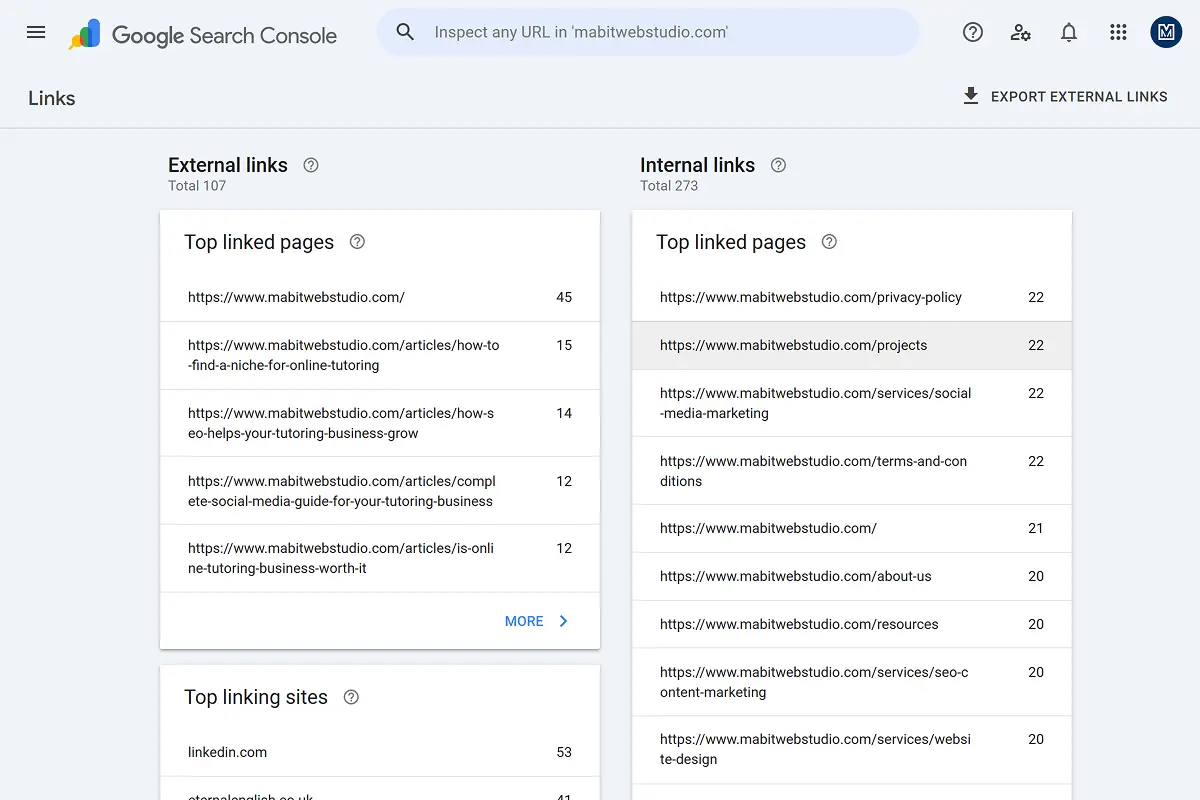
Hi, I am Abdur, founder of Mabit Web Studio. For the past three years, I've been helping education businesses grow with conversion-focused websites and effective marketing strategies.
In this article, I'll show you exactly how to build backlinks for your tutoring website, covering everything from types of backlinks, link-building strategies, to crafting outreach messages and paid backlinks campaigns.
Table of Contents
What Are Backlinks and Why Do They Matter for Tutors?
A backlink is a link from another website pointing to yours. Think of it like a recommendation. When an education blog, a parenting website, or a local directory links to your tutoring site, they're essentially saying: "This tutor is credible. Check them out."
Google pays close attention to these recommendations. The more quality sites that link to you, the more Google trusts your website. And trust leads to better rankings.
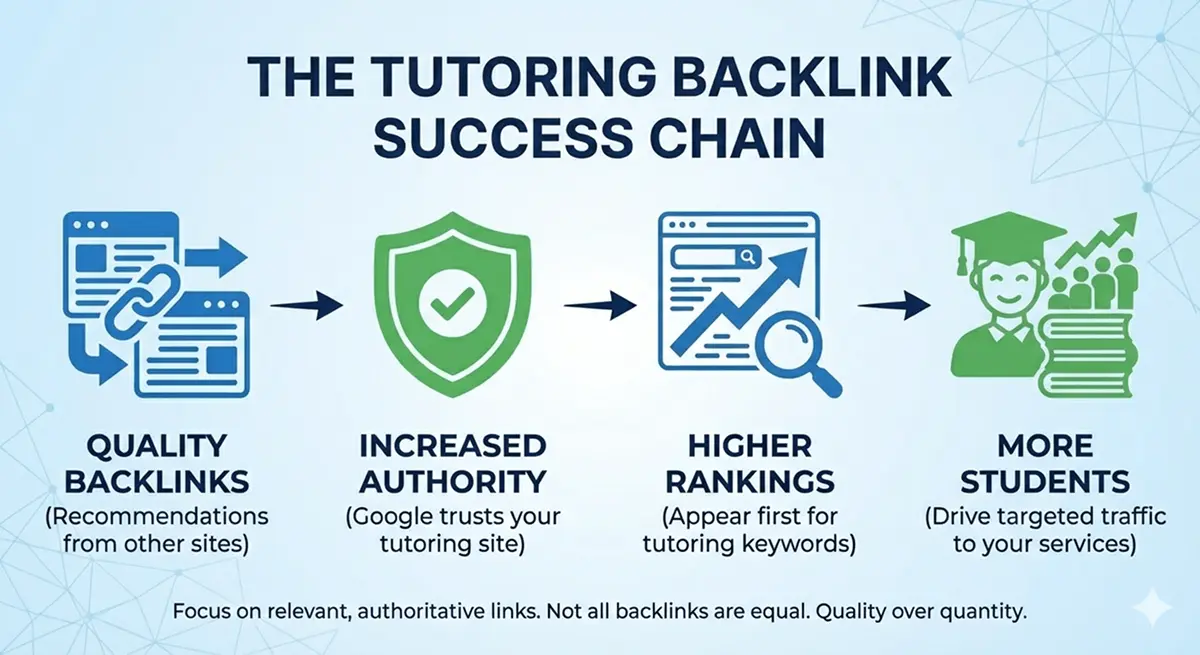
Why backlinks matter specifically for tutoring websites:
1. Authority: Backlinks from reputable education sites, news outlets, or local organizations signal to Google that you're a legitimate, trustworthy tutor, not a random website that popped up overnight.
2. Rankings: Google's algorithm treats backlinks as one of the top ranking factors. More quality backlinks = higher positions in search results for keywords like "Math tutor near me" or "online biology tutor."
3. Traffic: Some backlinks send direct traffic. When a parenting blog links to your article on "how to help your child with algebra," readers click through and land on your site.
Not all backlinks are equal!
A link from a spam directory with no real audience is worthless, or worse, it can hurt your rankings and get your website penalized by Google.
The difference between good and bad backlinks:
- Good backlinks come from relevant, authoritative sites with a good domain rating. They're earned naturally because your content is helpful.
- Bad backlinks come from low-quality, spammy sites with a low domain rating. They're often bought or generated through shady tactics.
Google isn't stupid. It knows the difference. Focus on quality, not quantity.
You can use these tools to check the domain authority of a website:
Types of Backlinks That Work for Tutors
Not every backlink strategy makes sense for tutoring businesses. Here are the types that actually work and are realistic to pursue:
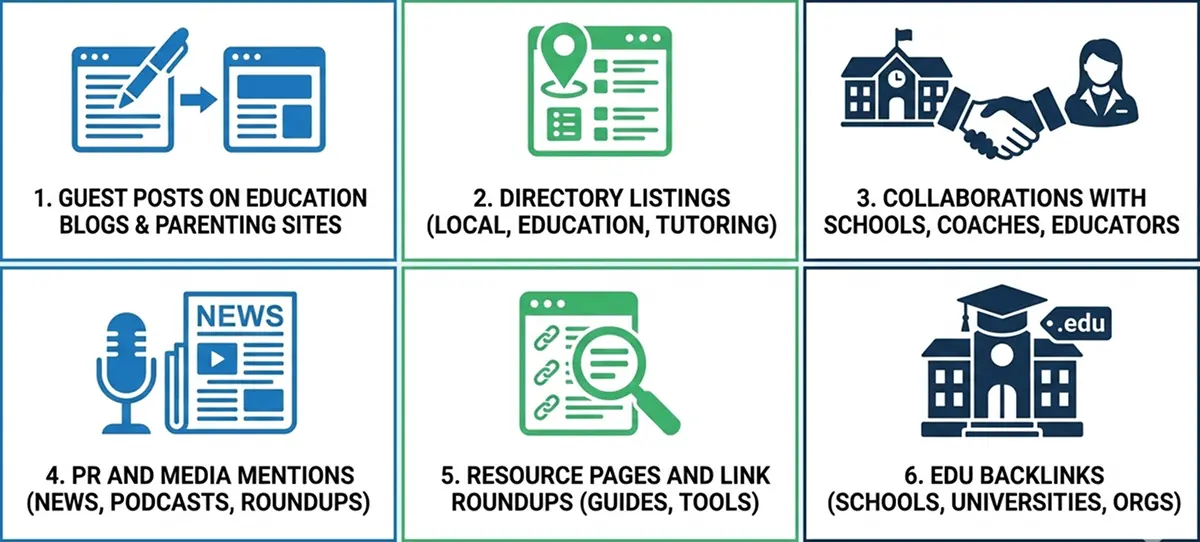
1. Guest Posts on Education Blogs and Parenting Sites
Writing an article for another website in exchange for a link back to your site.
Education blogs and parenting sites already have your ideal audience - parents looking for ways to help their kids succeed.
When you provide helpful content and link back to your site, readers click through because they're already interested in what you offer.
For example: You write a guest post for a parenting blog titled "5 Signs Your Child Needs a Math Tutor" and include a link to your tutoring services at the end.
These are easy to get if you're willing to write. Most education blogs accept guest contributions. It just takes outreach and a good pitch.
2. Directory Listings
Listing your tutoring business in online directories: local directories, education-specific directories, and tutoring platforms.
Directories are already trusted by Google, especially local and niche-specific ones. Getting listed improves your local SEO and provides a consistent backlink.
Example of Directory Listings For Tutors:
- Google Business Profile
- Yelp (if you offer local tutoring)
- Education-specific directories - local tutoring directories
- Chamber of Commerce or local business directories
These are easy to get, since claiming and optimizing directory profiles takes just a few hours.
3. Collaborations with Schools, Coaches, and Other Educators
Partnering with schools, homeschool co-ops, educational organizations, or other tutors for cross-promotion.
These organizations often have websites with good domain authority. A link from a school's resource page or a homeschool co-op's recommended tutors list carries significant SEO weight.
For example: A local school adds you to their "recommended tutors" page, or a homeschool co-op lists you in their resources section.
It’s not hard to get if you're already involved in your local education community. Relationships lead to links.
4. PR and Media Mentions
Getting featured in local news, education roundups, or online publications. Media sites and news outlets have extremely high domain authority.
A single mention in a local newspaper's online edition or an education industry roundup can boost your site's credibility significantly.
Examples:
- Local newspaper feature on "Top Tutors in [City]."
- Education website roundup of "Best Online Tutoring Services for SAT Prep."
- Podcast interview where your website is linked in the show notes
Local journalists are always looking for expert sources. A simple pitch about your tutoring expertise can land you coverage.
5. Resource Pages and Link Roundups
Getting your content linked from resource pages on education sites, teacher blogs, or parenting platforms.
Resource pages exist to help visitors find helpful content. If you've written a genuinely useful guide, like "How to Study for Chemistry Exams" or "SAT Math Formula Sheet," resource page curators want to include it.
For example: A teacher's blog has a resource page titled "Best Study Guides for High School Students" and links to your free downloadable guide.
You just need to create helpful content, find relevant resource pages, and pitch it.
These are easy to get if you find them. You just need to create helpful content, find relevant resource pages, and pitch it.
6. Edu Backlinks (If Applicable)
Links from .edu domains: schools, universities, or educational organizations.
.Edu domains carry massive authority in Google's eyes. A link from a school or university website is one of the most valuable backlinks you can get.
For example: A local university's tutoring center lists you as a recommended external tutor, or a high school includes your blog article in their student resources.
This is harder to get, but possible if you have connections in schools or offer free resources that schools find valuable (scholarships, study guides, webinars).
How to Find Sites That Might Link to You
Before you can start building backlinks, you need to know where to get them. Here's how to find relevant sites that might actually link to your tutoring website:
1. Google Search for Education Blogs and Parenting Sites
Use search queries like:
- "education blog"
- "parenting blog guest post"
- "homeschool resources"
- "study tips blog"
- "[your subject] blog" (e.g., "SAT prep blog" or "math tutoring blog")
Look through the results and identify blogs that:
- Accept guest posts (many mention it in their navigation or "Write for Us" pages)
- Have resource pages you could pitch your content to
- Cover topics relevant to your tutoring niche
2. Check Your Competitors' Backlinks
Your competitors are already getting backlinks. Find out where from, and target those same sites.
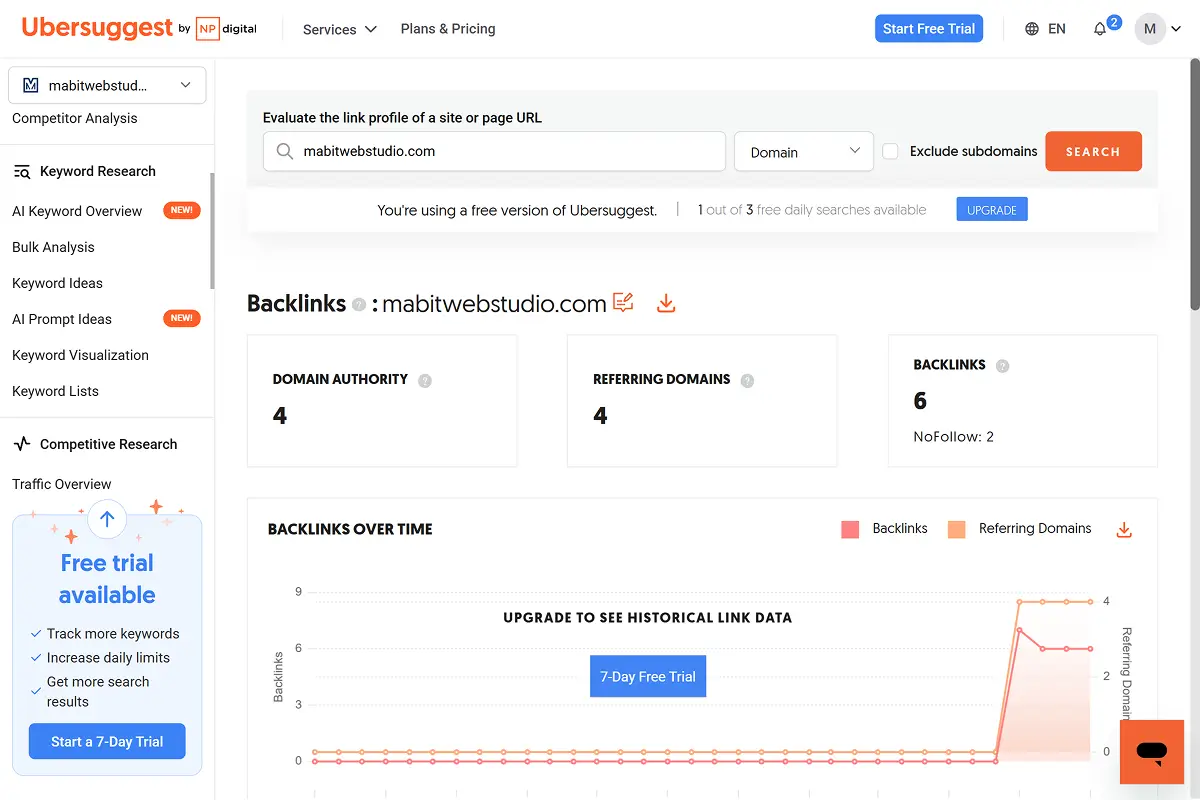
How to do this with Ubersuggest:
- Go to Ubersuggest (free plan available)
- Enter your competitor's website URL
- Click on "Backlinks" in the left sidebar
- You'll see a list of all the sites linking to your competitor
- Filter by Domain Score (aim for 40+ for quality)
- Export the list and identify sites you could realistically reach out to
This gives you a ready-made list of sites that are already linking to tutors like you.
3. Identify Local Directories and Community Sites
Search for:
- "[Your city] business directory"
- "[Your city] tutoring services"
- "[Your city] education resources"
- Local Chamber of Commerce websites
- Parent-teacher organization websites
- Homeschool co-op directories
These local directories are often overlooked but provide easy, relevant backlinks.
4. Build a Simple Spreadsheet
As you find potential sites, add them to a spreadsheet with:
- Website name
- URL
- Contact email (check their "About" or "Contact" page)
- Type of opportunity (guest post, resource page, directory)
- Notes (what you could pitch them)
This keeps you organized and makes outreach much easier.
Simple Link-Building Strategies for Tutors
Now that you know where to find opportunities, here's exactly how to turn them into backlinks:
Strategy 1: Guest Posting
Write helpful articles for education blogs, parenting sites, or teacher communities in exchange for a link back to your site.
How to do it:
- Find blogs that accept guest posts (Google "education blog guest post")
- Read their guest post guidelines
- Pitch a topic that would be valuable to their audience (not promotional)
- Write the article and include 1-2 contextual links to relevant pages on your site
- Submit and follow up
Here is an example:
Pitch a parenting blog: "5 Signs Your Child Needs Extra Help in Math, and What to Do About It." Include a natural link to your tutoring services or a free resource on your site.
Strategy 2: Pitching Resource Pages
Find resource pages on education sites or teacher blogs and pitch your content to be included.
How to do it:
- Search for "[your topic] resources" (e.g., "SAT prep resources")
- Look for pages that list helpful tools, guides, or websites
- Email the site owner and suggest adding your content with a short explanation of why it's valuable
Here is an example:
Email a teacher blog: "Hi [Name], I noticed your resource page on SAT prep. I recently published a free downloadable SAT Math Formula Sheet that your readers might find helpful. Would you consider adding it to your list?"
Keep it simple. One ask. One link. Clear value.
Strategy 3: Claiming and Optimizing Directory Listings
List your tutoring business on relevant directories and optimize the profiles.
How to do it:
- Claim your Google Business Profile (if you offer local tutoring)
- Submit your site to education-specific directories (Tutor.com, Wyzant, local tutoring directories)
- Fill out profiles completely with your business name, website link, services, and description
- Keep your NAP (Name, Address, Phone) consistent across all directories
Spend an afternoon claiming profiles on 5-10 directories. Each one is a backlink that stays live indefinitely.
Strategy 4: Collaborations and Interviews
Get featured on podcasts, webinars, or education blogs through collaborations.
How to do it:
- Reach out to education podcasts or YouTube channels in your niche
- Offer to be a guest and share your expertise
- Most shows will link to your website in the show notes or description
Here is an example: Email a parenting podcast: "Hi [Name], I'm an SAT prep tutor and I'd love to share study strategies on your show. I think your audience of parents would find it really helpful."
Strategy 5: Create Something Linkable
Build a resource that schools, blogs, or directories naturally want to link to.
Examples:
- A scholarship program (schools link to scholarship opportunities)
- A free study guide or downloadable resource
- A helpful calculator or tool (e.g., "GPA calculator" or "SAT score predictor")
- A comprehensive guide or research report
Here is an example: Create a "$500 Study Success Scholarship" for high school students. Local schools, blogs, and scholarship directories will link to it because it's valuable to their audience.
How to Craft Outreach Messages That Get Replies
Most backlink outreach fails because the message is generic, vague, or asks for too much too soon.
Here's how to write outreach emails that actually get responses:
1. Personalize the Message
Don't send mass emails that start with "Dear Webmaster."
Mention something specific about their site, their content, or their audience. This shows you're not spamming, you've actually looked at what they do.
2. Offer Clear Value
What's in it for them? Don't lead with what you want. Lead with what you're offering.
3. Keep It Short and Specific
Long emails don't get read. One ask. One link. One clear next step.
Example template:
Subject: Quick idea for [their blog name]
Hi [Name],
I came across your resource page on [topic] and thought your readers might find [your resource/article] helpful.
It covers [specific value] and has been really useful for parents/students in my tutoring practice.
Would you be open to adding it to your list? Here's the link: [URL]
Either way, keep up the great work on the blog!
[Your Name]
That's it. No fluff. Clear. Specific. Easy to say yes to.
4. Follow Up Without Being Pushy
Most people don't reply to the first email, not because they're not interested, but because they're busy. Send a polite follow-up 5-7 days later.
Just send one follow-up. That's it. If they don't reply after that, move on.
How to Track and Monitor Your Backlinks
Building backlinks without tracking them is like running ads without checking the results. You need to know what's working.
Here's how to track your backlinks and measure their impact:
1. Google Search Console (Free)
Google Search Console shows which sites are linking to you, and it's completely free.
How to use it:
- Go to Google Search Console (search.google.com/search-console)
- Click on "Links" in the left sidebar
- You'll see a list of all external sites linking to your website
- You can see which pages on your site are getting the most backlinks
This is the most reliable source because it's straight from Google.
2. Free Backlink Tools
- Ahrefs Webmaster Tools (Free):
- Shows your backlink profile, domain rating, and referring domains
- More detailed than Google Search Console
- Free if you verify your site
- Ubersuggest (Free + Paid Plan Starts at 12$):
- Shows backlinks, domain authority, and competitor backlinks
- Limited in the free plan but enough to get started
- Moz Link Explorer (Free Limited):
- Shows a snapshot of your backlink profile
- Tracks domain authority
3. Watch for Spammy or Toxic Links
Not all backlinks help. Some hurt. If you notice low-quality or spammy sites linking to you (think: random foreign directories, casino sites, adult content), you'll want to disavow them.
How to disavow toxic links:
- Create a text file listing the bad links
- Go to Google's Disavow Tool (search for "Google disavow tool")
- Upload the file
Google will ignore those links when calculating your site's authority.
4. Measure Impact: Traffic, Rankings, and Conversions
Backlinks are means to an end. The real metrics that matter:
- Organic traffic: Are you getting more visitors from Google?
- Keyword rankings: Are you ranking higher for your target keywords?
- Conversions: Are more people booking consultations?
Track these in Google Analytics and Search Console. If backlinks aren't moving these numbers, adjust your strategy.
Running Paid Backlink Campaigns
Everything we've covered so far: guest posting, outreach, directories, and collaborations, is DIY. You can do it yourself with time and effort.
But here's the reality: most tutors don't have the time.
Between teaching sessions, curriculum planning, and actually running a business, spending hours every week on backlink outreach isn't realistic for everyone.
That's where paid backlink campaigns come in. When done right, professional backlink services give you high-quality links without the manual work. The key phrase here is "when done right," because most cheap backlink services will destroy your rankings with spammy links.
Here are the three professional backlink strategies that actually work for tutoring websites:
1. Press Release Distribution
A press release distribution service writes and publishes a newsworthy announcement about your tutoring business to journalists and online media outlets.
This could be announcing a new tutoring program, a scholarship you're offering, a local partnership, or a milestone your business achieved.
What value it provides:
Media coverage builds credibility and brand exposure. When your press release gets picked up by news sites, you earn backlinks from high-authority domains: news outlets, industry publications, and education media sites.
These links signal trust to Google and can significantly boost your domain authority. Plus, parents searching for tutors often trust businesses they've seen mentioned in the news.
2. Blogger Outreach
It is a professional outreach service that connects with relevant bloggers in your niche: education blogs, parenting sites, homeschool communities, and secures guest post placements or mentions for you.
Unlike DIY outreach where you're cold-emailing bloggers yourself, a professional service has existing relationships with site owners and knows which sites accept placements.
What value it provides:
You get editorial backlinks from trusted, relevant blogs without doing the outreach yourself. These are the exact same links you'd get from DIY guest posting, but without spending weeks pitching and writing.
The links come from within blog posts that provide value to the site's audience, so they're natural, contextual, and SEO-friendly. Google sees these as legitimate authority signals.
3. Niche Edits
Niche edits (also called curated links or contextual links) are backlinks added to existing blog posts that are already published and ranking.
Instead of creating a brand-new guest post, a professional service finds relevant existing articles and adds your link naturally within the content.
What value it provides:
You benefit from content that's already established and has built authority over time. These posts are already indexed by Google, already ranking for keywords, and already getting traffic.
Adding your link to existing content means faster results compared to waiting for a new guest post to rank. Niche edits are particularly effective for competitive niches where new content takes months to gain traction.
How to Get Professional Backlink Services
The difference between good and bad paid backlink services comes down to one thing: quality over quantity.
Avoid cheap services promising "100 backlinks for $50." Those are spam links that will hurt your site, not help it.
Work with reputable agencies that focus on high-quality, relevant backlinks from real sites in the education and tutoring niche.
At Mabit Web Studio, we're partnered with a trusted backlinks and PR agency that specializes in quality link-building for education businesses. We provide press release distribution, blogger outreach, and niche edit services tailored specifically for tutoring websites.
If you'd rather focus on teaching while professionals handle your backlink strategy, contact us to learn more about our SEO and backlink services.
Quick Steps to Start Getting Backlinks Today
Here's exactly what to do right now:
Step 1: Identify 5-10 Relevant Sites
Google "[your niche] blog guest post" and "[your niche] resources." Build a list of 5-10 sites that look relevant and reachable.
Step 2: Write One Short Pitch
Pick one site from your list and write a personalized outreach email. Use the template from earlier. Keep it under 100 words.
Step 3: Claim One Directory Listing
Claim your Google Business Profile (if you haven't already) or submit your site to one education directory. This takes 15 minutes and gives you an instant backlink.
Step 4: Set Up Google Search Console
If you haven't already, verify your site on Google Search Console. This lets you track your backlinks as they grow.
Step 5: Create One Piece of Linkable Content
Write one helpful guide or resource on your site. Something specific and genuinely useful. "SAT Math Formula Sheet" or "How to Study for Chemistry: A Step-by-Step Guide."
This is what you'll pitch to other sites as a resource worth linking to.
FAQs About Backlinks for Tutoring Websites
1. How many backlinks do I need to rank higher?
There's no magic number. Quality matters far more than quantity. 10 backlinks from authoritative education sites will outperform 100 backlinks from spammy directories. Focus on getting relevant, high-authority links even if it's just a few per month.
2: How long does it take to see results from backlinks?
Backlinks aren't instant. It typically takes 2-6 months to see a noticeable impact on rankings and traffic. Google needs time to crawl the new links and recalculate your site's authority. Be patient and keep building consistently.
3: Should I buy backlinks?
No. Buying backlinks violates Google's guidelines and can get your site penalized. Most paid link services provide low-quality, spammy links that hurt more than they help. Stick to earning links naturally through outreach, guest posts, and valuable content.
4: Can I get backlinks without creating content?
Yes, but it's harder. You can get backlinks through directory listings, local citations, and collaborations without writing blog content. However, having helpful content on your site makes it much easier to earn links, sites are more likely to link to a valuable resource than just your homepage.
5: What's the difference between dofollow and nofollow backlinks?
Dofollow links pass SEO value (they help your rankings). Nofollow links tell Google not to pass SEO value. While dofollow links are more valuable, nofollow links still help by sending traffic and building brand awareness. Don't obsess over the distinction; focus on getting relevant links from good sites.
Conclusion
Backlinks aren't a one-time task. They're an ongoing part of growing your tutoring website's authority and visibility. The tutors who rank highest on Google aren't just the ones with the best websites; they're the ones who've built trust through quality backlinks over time.
Start small. One pitch. One directory. One piece of linkable content. Do that consistently for 6 months, and you'll see your rankings improve, your traffic grow, and more parents finding your tutoring services.
Key Takeaways:
- Backlinks are links from other sites to yours, they signal trust and authority to Google
- Quality matters more than quantity: relevant, authoritative backlinks move the needle
- Best backlink types for tutors: guest posts, directories, collaborations, PR mentions, resource pages
- Find link opportunities through Google search, competitor analysis (Ubersuggest), and local directories
- Simple strategies that work: guest posting, pitching resource pages, claiming directories, collaborations, creating linkable content
- Write personalized outreach emails: mention their site, offer value, keep it short, follow up once
- Track backlinks with Google Search Console and free tools (Ahrefs Webmaster Tools, Ubersuggest)
- Avoid toxic links, disavow spammy backlinks that could hurt your rankings
- Start today: identify 5-10 sites, write one pitch, claim one directory, set up tracking
- Results take 2-6 months, be patient and consistent
Backlinks are just one piece of building a successful tutoring website. For the complete guide on building a website that attracts students, including foundation, SEO, content, and conversion strategies, check out my full article: How to Build a Website For Your Tutoring Business.
At Mabit Web Studio, we help tutors not just build websites, but grow them with SEO and backlink strategies. We're partnered with a reputable backlinks and PR agency and provide backlink services upon request.
Schedule a consultation to discuss how we can help your tutoring website rank higher and attract more students.