Which Social Media Platform Is Best for Tutors?
Most tutors make the same mistake when it comes to social media. They either try to be everywhere at once (LinkedIn, Instagram, Facebook, YouTube, TikTok), posting inconsistently across all of them, burning out within a few weeks, and wondering why nothing is working.
Or they pick a platform randomly because someone said "you should be on Instagram" or "LinkedIn is great for tutors," without ever asking whether that platform actually makes sense for ‘their’ audience, ‘their’ niche, and ‘their’ content style.
Here's the truth: the wrong platform won't just slow your growth. It'll waste months of effort that could have been invested somewhere that actually works.

Hi, I'm Abdur, founder of Mabit Web Studio. For the past four years, I've been helping education businesses grow with conversion-focused websites and effective marketing strategies.
In this guide, I'll help you cut through the noise and make a clear, confident decision about which social media platform is actually right for your tutoring business, based on your audience, your niche, and your available resources.
By the end, you'll have a practical framework, a niche-to-platform reference guide, and a clear answer to the question most tutors struggle with: "I can't be everywhere, so where exactly should I be?”
Table of Contents
Why Platform Selection Is the First Decision You Should Make
Before you think about content ideas, posting schedules, or what your profile bio should say, you need to figure out ‘where’ you should be.
Platform choice is foundational. It determines who sees your content, what format you create, how much time you invest, and ultimately how many students you attract. Get this decision wrong, and everything else you do on social media is built on a shaky base.
Here's the problem: most advice online about social media for tutors is generic: "Use Instagram!" "LinkedIn is great!" "YouTube gets you found on Google!"
These statements might all be true in the right context but they're meaningless without knowing your specific situation.
And the advice that hurts tutors most?
"Just try everything and see what sticks."
That might sound reasonable. In practice, it's a disaster.

If you're a solo tutor or running a small tutoring business, your time is your most valuable resource. You already have sessions to run, lesson plans to prepare, and students to support.
Adding five social media platforms to manage, with different content formats and different algorithm rules, is a recipe for burnout without results.
Consistent posting on one or two platforms significantly outperforms irregular activity spread across many. The algorithm rewards accounts that show up regularly and you can only show up regularly where you've made a focused commitment.
The one principle that should anchor this entire decision: be where your audience already is.
Not where you personally spend the most time. Not where your competitor happens to be active. Where your ideal students or their parents are already spending their time online.
Everything else follows from that.
5 Key Factors to Consider Before Choosing a Platform
Before I break down each platform, you need to run your tutoring business through these five filters. These are the factors that separate a smart platform decision from a random one.
1. Who Is Your Ideal Target Audience
This is the most important factor by far. Different platforms attract very different age groups and demographics.
According to Pew Research Center's 2025 survey of over 5,000 US adults, Facebook is used by 80% of 30 to 49 year-olds and 74% of adults aged 50 to 64. If your students are kids and teenagers, it's their parents you need to reach and the parents are on Facebook.
Meanwhile, 80% of adults aged 18-29 use Instagram. YouTube reaches 95% of 18-29 year-olds and 92% of 30-49 year-olds. TikTok is used by 63% of US teens.
Ask yourself: Who is the actual decision-maker? In K-12 tutoring, a parent books and pays. In adult professional development, the learner decides for themselves. These two scenarios point to completely different platforms.
2. What is Your Tutoring Niche
Your subject area and student type directly influence where your audience congregates online.
STEM tutors, language coaches, and test prep specialists have strong YouTube search demand. Students actively search for subject-specific help on YouTube, the world's second-largest search engine.
Creative and arts tutors find visual platforms like Instagram align naturally with their content.
Professional development coaches and corporate trainers will find their audience on LinkedIn.
Your niche isn't just a topic, it's a signal pointing you toward specific platforms.
3. What is Your Preferred Content Style
Different platforms reward different content formats. And your natural strengths matter here.
- Are you comfortable talking to a camera? YouTube and Instagram Reels are your strongest options.
- Do you think and write clearly? LinkedIn's text-based posts perform exceptionally well.
- Are you great at explaining concepts visually? Instagram carousels and infographics thrive.
Not gonna lie, trying to force yourself into a content style that feels unnatural is one of the fastest ways to burn out. Play to your strengths first, and develop new skills over time.
Note: In this new era, video content is everything! Every platform favors short video formats. So, if you are not comfortable infront of the camera and making videos, highly recommend that you learn and improve this skill over time.
4. Your Available Time and Resources
This one is often ignored in platform advice, and it shouldn't be.
YouTube requires scripting, recording, editing, and thumbnail creation. Even a 10-minute video can take 3-5 hours to produce well. Instagram Reels take less time but still require consistent output. LinkedIn's text-based format is far less time-intensive.
If you're a solo tutor with 3-5 hours per week for marketing, your platform decision needs to account for that reality. Choosing YouTube as your primary platform when you have limited time will set you up to fail, not because YouTube is wrong for your niche, but because you can't sustain it.
Tools like SocialRails can lighten this load by handling content scheduling across multiple platforms in just 60 seconds, so even tutors managing tight time budgets can maintain consistent posting without the production overhead.
5. Your Business Goal
Different goals point to different platforms
- Building authority and trust over time: YouTube, LinkedIn.
- Generating local student inquiries quickly: Facebook (local groups, community pages).
- Growing brand awareness among younger students: Instagram, TikTok.
- Building B2B partnerships with schools or organizations: LinkedIn.
Be clear on what you're trying to achieve. A platform that's perfect for awareness may not be the best for converting leads.
Platform-by-Platform Breakdown for Tutors
Here's the honest breakdown of every major platform, not the surface-level version, but the real specifics that matter for your tutoring business.
LinkedIn Marketing for Tutors
LinkedIn's largest user group is 25-34 year olds, followed closely by 35-44. It's a platform of professionals: people actively building careers, upskilling, or making business decisions.
LinkedIn is the #1 platform for B2B marketers, and its audience has a noticeably higher-than-average income and education level.
Best tutoring niches for LinkedIn:
- Professional development coaching (leadership, communication, productivity).
- University-level academic subjects.
- Corporate training and upskilling.
- Language coaching for professionals.
- B2B education partnerships with organizations or schools.
Content that performs:
Text-based posts with strong hooks perform best on LinkedIn, significantly outperforming video and image posts.
Educational posts, industry insights, student success stories, and thought leadership content work well.
LinkedIn attention is brief, so strong hooks and practical takeaways are non-negotiable.
Honest pros:
- Excellent for establishing professional authority.
- Organic reach is still meaningful compared to other platforms.
- Great for B2B networking, school partnerships, and referrals.
- Text-first format means less content production overhead.
Honest cons:
- Not where K-12 students or their parents primarily spend time.
- Competition is increasing with more marketers flooding the platform with AI-generated content.
- Engagement requires active commenting, posting alone isn't enough.
My Recommendation:
Prioritize LinkedIn if your students are adults, professionals, or if you're building B2B education partnerships. If you're teaching K-12 academic subjects to teenagers, LinkedIn should not be your primary focus.
Facebook Marketing for Tutors
According to Pew Research (2025), Facebook is used by 80% of 30-49 year-olds and 74% of 50-64 year-olds. It's the only platform besides YouTube where a majority in all adult age groups reports using it. And importantly, the 35-44 demographic spends the most time on Facebook, averaging 38 minutes per session.
This is where parents are. Full stop.

Best tutoring niches for Facebook:
- K-12 academic tutoring (especially if parents are your primary audience).
- Local tutoring services.
- Community-based education businesses.
- Homeschool tutoring (very active communities on Facebook).
- Adult continuing education.
Content that performs:
Short-form video gets 48% interaction among Facebook users. Long-form posts with genuine value, event announcements, and community-building content also work. Parent groups, when active, can be a strong referral source.
Honest pros:
- Where parents of school-age children are most active.
- Facebook Groups can build a community around your tutoring business.
- Strong ad targeting capabilities for local demographics.
- Easy to run both a personal creator brand and a business page.
Honest cons:
- Organic reach for Business Pages has dropped significantly in recent years.
- Many Facebook Groups are inactive, especially in the education niche (this varies by location and niche, test it before committing).
- Requires ad budget to scale reach on the Business Page side.
My Recommendation:
If you're targeting parents or running a local K-12 tutoring service, Facebook belongs on your list. Just be realistic: organic reach requires consistent effort and community building, not just page posts. Use a personal creator profile for educational content and your business page for promotions and ads.
Instagram Marketing for Tutors
Instagram is used by 80% of US adults aged 18-29, and the 18-34 age range makes up over 61% of Instagram's total user base. It's the dominant platform for younger demographics and visually-driven content.
According to Pew Research (2025), Instagram has now reached 50% adoption across all US adults, a significant milestone.

Best tutoring niches for Instagram:
- Creative subjects (art, music, design).
- High school students and young adults.
- Language learning.
- Study tips and academic productivity coaching.
- Lifestyle-adjacent education.
Content that performs:
Short Reels outperform everything else on Instagram right now. Educational carousels (swipe posts with bite-sized tips), infographics, and Stories with polls and Q&A stickers generate strong engagement. The platform is visual-first, written content alone won't cut it here.
Honest pros:
- Massive younger demographic reach.
- Reels can go beyond your follower base through the Explore page.
- Great for building a personal brand and connecting with students directly.
- Meta Business Suite lets you manage Instagram and Facebook simultaneously.
Honest cons:
- Requires consistent visual content production, time-intensive for solo tutors.
- Organic reach has declined for static posts, reels are now the primary growth driver.
- High school students may scroll past educational content unless it's entertaining, not just informative.
My Recommendation:
Prioritize Instagram if your students are teenagers or young adults, your subject is visually demonstrable, or you're comfortable creating short-form videos. If you teach dry academic subjects to older students or parents, Instagram is a secondary platform at best.
YouTube Marketing for Tutors
YouTube is the most universally used platform. Pew Research (2025) found that 84% of all US adults use YouTube, the highest adoption rate of any social platform.
It reaches 95% of 18-29-year-olds and 92% of 30-49-year-olds. Unlike every other platform on this list, YouTube has meaningful reach across all age groups.
And here's the critical distinction: YouTube is a search engine, not just a social platform.
When a student types "how to solve quadratic equations" or "IELTS speaking tips," they go to YouTube. That search intent is gold, these are people actively looking for exactly what you teach.
Best tutoring niches for YouTube:
- STEM subjects (math, science, coding).
- Language learning and test prep (IELTS, SAT, GMAT).
- Any subject with high search volume on YouTube.
- Educational content creators building long-term authority.
- Online coaches building a library of free resources.
Content that performs:
Long-form tutorials, step-by-step explainers, and subject-specific educational videos perform best. YouTube Shorts extend your reach to mobile-first viewers.
Both video types can rank on Google search results, giving you double SEO value for your tutoring business website.
Honest pros:
- Reaches all age groups: students, parents, and adult learners.
- Videos rank on both YouTube and Google Search (massive SEO advantage).
- Builds the deepest trust of any platform, viewers see your full teaching style.
- Long content lifespan, a video you upload today can bring students 3 years from now.
Honest cons:
- Highest content production requirement of all platforms.
- Takes the longest to gain initial traction (typically 6-12 months of consistent uploads).
- Requires scripting, recording, and editing, or budget to outsource.
My Recommendation:
YouTube is the strongest long-term platform for any tutoring niche. The time investment is significant, but the compounding return is unmatched.
If you can only have one platform that works while you sleep, this is it. Pair it with a well-optimized tutoring business website for maximum SEO leverage.
TikTok Marketing for Tutors
TikTok is used by 63% of US teens and 24% of all US adults daily, according to Pew Research (2025). Its largest age group globally is 25-34 (35.3%), followed by 18–24 (30.7%). TikTok usage among the 35+ demographic has been growing, but it's still fundamentally a Gen Z and younger Millennial platform.

Best tutoring niches for TikTok:
- Language learning (incredibly active community on TikTok).
- Study hacks and academic productivity.
- Informal bite-sized lessons on fun or trending topics.
- Creative subjects where demonstrations are quick and visual.
Honest pros:
- Viral potential is higher than any other platform.
- Great for rapid brand awareness among young audiences.
- Excellent for language, study tips, and creative niches.
Honest cons:
- The key question isn't whether your audience is on TikTok. It's whether they're on TikTok to learn. Most TikTok users are there to scroll and be entertained, converting that attention into actual tutoring bookings is harder than it looks.
- Content has a very short lifespan.
- Requires a high volume of content to maintain momentum.
- Regulatory uncertainty in some markets has created hesitation around long-term platform investment.
My Recommendation:
TikTok is worth testing if your audience is Gen Z and your niche lends itself to short, engaging content. But it should be a secondary platform, not a primary one.
The intent gap: entertainment vs. education, makes converting TikTok views into actual students more challenging than on YouTube or Facebook.
Quick Reference: Platform Recommendations by Tutoring Niche
Not sure where to start? Use this as your quick reference guide.
Remember, this is a starting framework, not a rigid rule. Your specific audience research should always take priority over any generic guide, including this one.
How to Choose Your Platform: A Simple 3-Step Framework
You've reviewed the platforms. You've looked at the niche guide. Now here's the process to make the final decision with confidence.

Step 1: Define your audience precisely
Don't just write "students." Get specific. How old are they?
Are they the decision-maker, or is a parent booking and paying?
Where are they geographically? What platforms do they personally use daily?
If you're not sure, ask your current students or past clients where they spend time online. You'll get more useful data in 10 minutes of conversation than from any marketing guide.
Step 2: Match your audience to a platform
Use the platform breakdown and niche guide above. Cross-reference it with the 5 key factors: audience, niche, content style, available time, and business goal. You should be able to narrow down to 2 platforms maximum.
Pick one as your primary - this is where you invest the bulk of your effort and show up consistently.
Pick one as your secondary - this is where you repurpose your primary content with less effort.
Step 3: Commit and give it time
This is where most tutors fail. They pick a platform, post for 4-6 weeks, see limited results, and switch to something else.
Social media doesn't work that way. Meaningful traction typically takes 3-6 months of consistent effort.
According to data across all major platforms, the algorithm begins to understand and distribute your content more effectively as you build a history of consistent posting and engagement.
Commit to your primary platform for at least 3 months before making any decisions based on results.
Should You Be on Multiple Platforms?
Here's the honest answer: focus first, expand later.
The argument for being on multiple platforms sounds logical, more platforms means more reach, more diversification, and less risk if one platform's algorithm changes. And at scale, that's true.
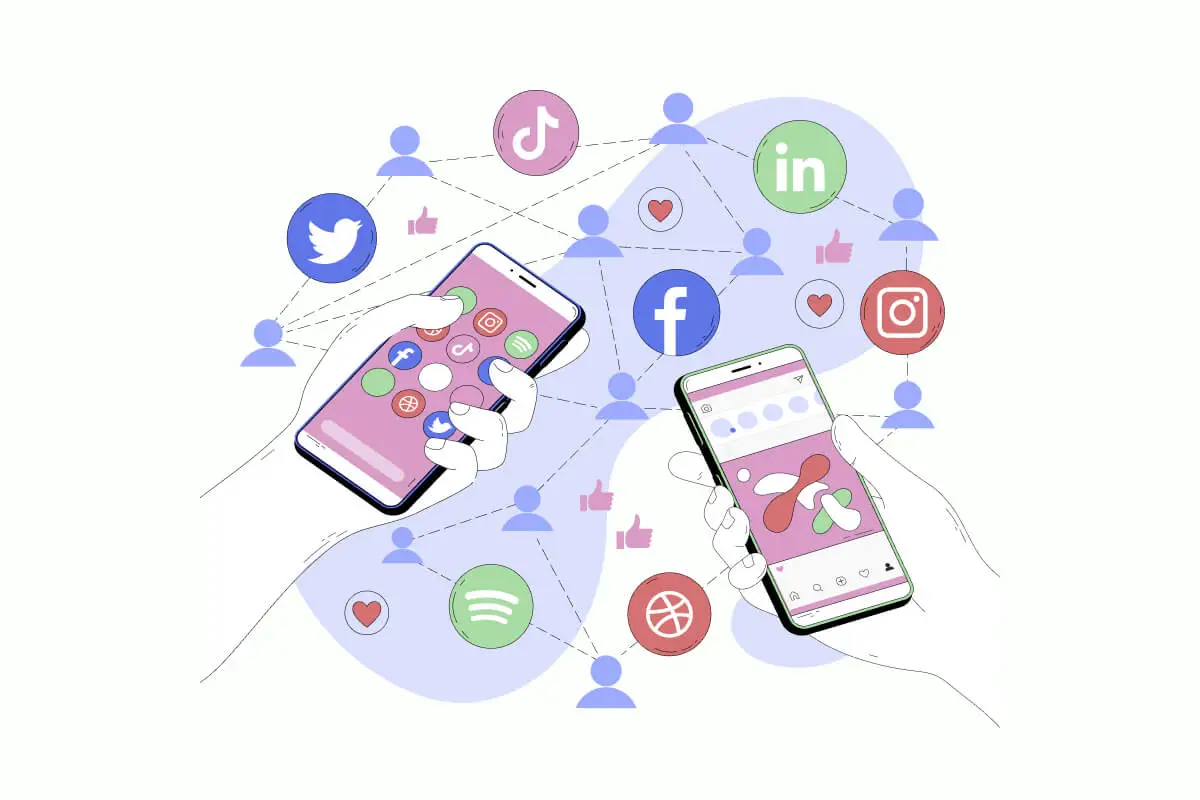
But there's a real cost to spreading thin early on. You end up posting mediocre content on five platforms instead of great content on one. The algorithm on every platform rewards depth and consistency, two things that are nearly impossible to achieve when your attention is fragmented.
When you're just starting:
Choose one primary platform and do it well. Build an audience, understand what content resonates, and establish a posting system that's sustainable. This takes 3-6 months minimum.
When to consider expanding:
You know your primary platform is working when you're getting consistent engagement, regular profile visits or inquiries, and you've built a repeatable content process. At that point, adding a secondary platform becomes an extension of something that's already working, not a gamble.
How to expand without burning out:
Repurpose, don't recreate. A YouTube video becomes a LinkedIn post, a series of Instagram Reels, and an email newsletter. One piece of core content becomes multiple platform-specific assets with a fraction of the extra effort. Your primary platform produces the content. Your secondary platforms distribute it.
For a complete breakdown of platform-specific strategies and content frameworks, read our Complete Social Media Guide for Your Tutoring Business.
3 Common Mistakes Tutors Make When Choosing Platforms
Mistake 1: Choosing based on personal preference, not audience behavior
This is the most common one. A tutor uses Instagram personally and loves it, so they assume their students do too. Or they've heard LinkedIn is professional, so they assume all professional subjects belong there.
Your personal platform habits are irrelevant to this decision. The only thing that matters is where your audience is active and what they use those platforms for.
Mistake 2: Copying a competitor without checking context
You notice a successful math tutor crushing it on YouTube, so you start a YouTube channel. But your audience is parents of 7-year-olds who need local tutoring, not teenagers searching YouTube for homework help. Same niche, completely different audience, completely different platform fit.
Competitor research is useful for understanding what content works. It's not a reliable guide for which platform to choose. Context always matters.
Mistake 3: Platform hopping instead of committing
This is the silent killer of tutoring businesses on social media. A tutor spends 2 months on LinkedIn, sees slow growth, and switches to Instagram. Spends 2 months on Instagram, gets frustrated, and tries YouTube. The cycle repeats.
The truth is: you probably didn't fail on any of those platforms. You just didn't give them enough time. Every platform has a trust-building curve. The tutors who succeed are almost always the ones who stayed consistent when results were slow, not the ones who had the perfect platform from day one.
FAQs About Choosing Social Media Platforms for Tutors
Q. Which social media platform gets tutors the most students?
There's no universal answer! It genuinely depends on your niche and audience. However, YouTube consistently produces the highest-quality leads for tutors who invest in it, because viewers find you through active search intent. They're not scrolling past your content randomly, they searched for what you teach.
For local K-12 tutors targeting parents, Facebook often produces the most direct student inquiries.
Q. Can a tutor be successful with only one platform?
Absolutely. In fact, many of the most successful tutors online have built their entire student base from a single platform done consistently and well. Depth beats breadth, especially when you're building from scratch.
Q. Is TikTok worth it for tutors in 2026?
It depends heavily on your niche. Language tutors and study-tips coaches have found genuine traction on TikTok. For academic tutors targeting K-12 students or professional development coaching, the intent gap makes TikTok a low-priority platform. Test it as a secondary channel if your audience is Gen Z, but don't build your strategy around it.
Q. What's better for tutors: Instagram or YouTube?
They serve very different purposes. Instagram builds brand visibility and community. YouTube builds deep trust and captures active search demand. If you can only choose one and you're comfortable on camera, YouTube has a stronger long-term ROI for most tutoring niches.
If you're targeting teenagers or young adults and want faster growth, Instagram Reels can build awareness more quickly in the early stages.
Q. How long before I see results from social media?
Realistically, expect 3-6 months of consistent effort before you see meaningful traction. The first month is about building your foundation. Months 2-3 are about learning what content resonates.
By months 4-6, you should start seeing consistent engagement and student inquiries, if you've been showing up regularly. Social media is a long-term strategy. Treating it like a quick fix is the biggest expectation mismatch most tutors have.
Conclusion
There is no universally "best" social media platform for tutors. There's only the best platform for your specific audience, niche, content style, and goals.
The tutor who nails this decision isn't necessarily the one with the largest budget or the most marketing experience. It's the one who takes the time to understand where their audience actually is and then shows up there consistently.
The core message is simple: being focused beats being everywhere.
One platform, done with genuine consistency and quality, will produce better results than five platforms managed half-heartedly.
Key Takeaways:
- Platform selection is foundational, everything else in your social media strategy depends on getting this right
- Use the 5 key factors (audience, niche, content style, time, and goal) to guide your decision, not generic advice
- YouTube has the highest reach across all age groups and the strongest long-term ROI through search intent
- Facebook is where parents of K-12 students spend the most time, critical for local and academic tutors
- Instagram is strongest for younger audiences and visual/creative niches
- LinkedIn is the right choice for professional development, adult learners, and B2B education opportunities
- TikTok is a secondary option for Gen Z niches, don't build your primary strategy around it
- Commit to one primary platform for at least 3 months before making any judgments based on results
- Repurpose content across platforms to expand reach without burning out
- Expand to a second platform only after you've built sustainable momentum on the first
Once you've chosen your platform, the next step is building a strategy that actually works on it.
For a complete breakdown of how to execute social media marketing on each platform, including LinkedIn, Facebook, Instagram, and YouTube, be sure to read our Complete Social Media Guide For Tutors.
And if you're struggling to attract students despite your social media efforts, the issue often isn't the content, it's the destination. A well-optimized tutoring website gives your social media a place to send people that actually converts them into students.
If you want help building a conversion-focused website and marketing strategy for your tutoring business, schedule a free strategy call.