Must-Have Website Pages for Your Tutoring Business
A tutoring website with the wrong pages, or no structure at all, loses students before they even get a chance to know you.
Visitors land on your site with specific questions: What subjects do you teach? How does it work? Can I trust this person with my child's education? If they can't find clear answers quickly, they leave. And they book someone else.
The pages on your website, and how they connect to each other, determine whether visitors convert into leads or bounce in under 30 seconds.
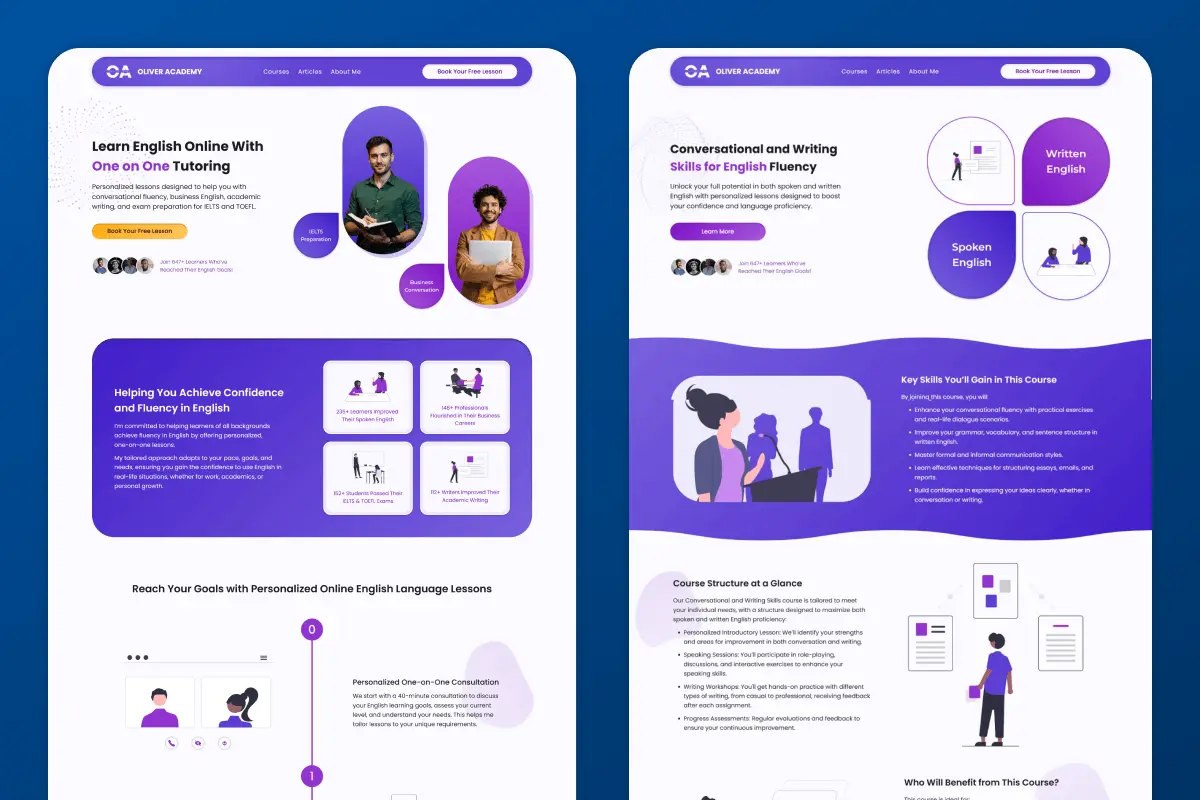
Hi, I am Abdur, founder of Mabit Web Studio. For the past four years, I've been helping education businesses grow with conversion-focused websites and effective marketing strategies.
In this article, I'll walk you through every page your tutoring website needs, what each page should say, and how to structure them so visitors naturally move toward booking.
Table of Contents
Why Page Structure Matters
Most tutors build websites page by page without thinking about how those pages work together.
The result? A site that looks decent but doesn't guide visitors anywhere. No clear next step. No logical flow. No reason for a parent to stick around.
User experience: Clear, well-structured pages reduce friction. When visitors instantly understand where to go, they stay longer and engage more. Confused visitors leave.
SEO: Each page targets different keywords. A homepage targets your main service keywords. A blog post targets a specific question. A location page targets "tutor in [city]." Proper page structure means more opportunities to rank and more traffic from different search queries.
Conversions: A well-organized website guides visitors through a journey: discover your business -> learn about your services -> see proof -> take action. Every page plays a role in that journey. When one page is missing or unclear, the journey breaks.
Must Have Pages For Your Tutoring Website
The essential pages are:
- Homepage
- Service Pages
- About Page
- Booking Page
- Testimonial and Student Success Page
- Blog and Resources Page
- FAQ Page
There are also optional pages. Let’s discuss each of them in more details.
Homepage: Your Main Conversion Hub
Your homepage is the most important page on your tutoring website. Most visitors land here first. It needs to answer three questions in the first five seconds: Who are you? What do you offer? Why should I trust you?

Key elements your homepage needs:
- Clear headline: State exactly what you do. "Online SAT Math Tutor for High School Students" is better than "Welcome to My Tutoring Service."
- Subheadline: Explain your value. What outcome do you deliver?
- Primary CTA: One prominent button. "Book a Free Consultation" or "Schedule a Discovery Call."
Content structure that converts:
- Hero section: Your headline, subheadline, and CTA. Use a real photo of yourself or your teaching environment. Authenticity builds trust faster than any stock image.
- Purpose/Why section: What's your mission? Why do you teach? A short video here works incredibly well. People connect with your voice and personality in ways text can't replicate.
- Process section: How does working with you actually work? From consultation to first session to ongoing progress. Clear process descriptions reduce anxiety.
- Services overview: Brief descriptions of your key services with links to individual service pages.
- Social proof: Testimonials, student results, parent reviews. Specific results beat generic praise every time.
- About/Founder section: A short introduction with your photo. Save the full story for your About page.
- Final CTA section: Acknowledge a common student pain point and invite action.
- Lead magnet section: A free resource in exchange for an email. Captures leads who aren't ready to book yet.
- Blog highlights: Recent articles. Positions you as an expert and gives visitors more reasons to stay.
Your homepage isn't a brochure. It's a guided journey from landing to booking.
Services Pages: Make Your Offer Crystal Clear
The services page is where visitors decide whether you're the right tutor for them. Too many tutors bury this information or describe their services vaguely.
What to include:
- Overview: A brief summary of what you teach, who you serve, and your approach.
- Individual service sections: Each service (SAT prep, algebra tutoring, Spanish lessons, etc.) should have its own section explaining what's included, who it's for, and what outcome students get.
- Clear CTAs on each section: "Book SAT Prep Consultation" beats a generic "Contact Me" at the bottom of the page.
Differentiating your service models:
If you offer 1-on-1 sessions, group classes, and recorded courses, clearly explain the difference. Many tutors assume visitors already understand these formats, but often they don't. Spell it out: who each model suits, how it's delivered, and what the outcome is.
Don't just list subjects. Explain the transformation. "Help your child go from struggling in algebra to confident and test-ready in 8 weeks" is more compelling than "Algebra tutoring available."
About Page: Build Trust and Connection
Here's the thing most tutors get wrong about the About page: it's not really about you. It's about why a parent or student should trust you with their education.

What to include:
- Your photo: A real, warm, professional photo. Not a distant stock-style headshot.
- Your story: Why did you start tutoring? What drives you? Keep it genuine. Parents connect with purpose, not just credentials. Video is the best option!
- Your credentials: Qualifications, experience, and any specializations. Be specific.
- Your teaching philosophy: How do you approach learning? What makes your method different?
- A CTA: Your About page should end with an invitation: "Want to see if I'm the right fit? Book a free consultation."
People don't hire credentials. They hire people they trust. Your About page is where that trust is built.
Booking Page: Make It Effortless to Reach You
Every extra step in your booking process loses potential students. Parents are busy. If booking feels complicated, they'll move on to a tutor who makes it easy.
Key elements:
- Simple contact form: Name, email, subject, and a short message. Nothing more.
- Scheduling link: Use Calendly or a similar tool so parents can book a call without back-and-forth emails.
- Email address: For parents who prefer to reach out directly.
- Trust signals near the form: A short testimonial or your credentials placed next to the booking form reduces hesitation right before the key action.
The goal is frictionless. One form. One click to schedule. One clear next step.
Testimonials and Student Success Page
Testimonials aren't just nice to have; they're one of the highest-converting elements on any tutoring website.
What to include:
- Student and parent testimonials: Specific results are 10x more powerful than generic praise. "My son's SAT score went from 1150 to 1380 in 8 weeks" is better than "Great tutor, highly recommend."
- Video testimonials: If you can get them, use them. Video builds trust in ways text simply can't.
- Case studies: A brief before-and-after story for 1-2 students. What was their challenge? How did you help? What was the result?
Quick tips: Instead of asking parents/students to provide a video testimonial, let them join a quick Zoom call where you’ll ask certain questions about your work and they will provide their honest feedback. Record and publish.
Most people are not comfortable talking in front of the camera. So when you ask them to record a video, the quality ends up being low.
Where to place social proof:
Don't save it all for one page. Place testimonials after your services section, before your booking form, and anywhere a visitor might hesitate. The right testimonial at the right moment can be the difference between "I'll think about it" and "I'm booking now."
Blog and Resources Page
A blog isn't just content. It's your most sustainable source of free, organic traffic.
Every article you publish targets different keywords your ideal students are searching for. "How to improve SAT math scores," "best way to learn Spanish grammar," "chemistry exam study tips." These searches happen thousands of times per month.

What to include:
- Blog highlights: Feature your most popular or most relevant articles prominently.
- Resource library: Study guides, checklists, downloads. This is also where your lead magnets live.
- Clear internal links: Every blog post should link back to a relevant service page. Blog content builds trust; service pages convert that trust into bookings.
The long-term play: Articles you write today will bring students 12, 18, even 24 months from now. It's one of the few marketing assets that compounds over time.
FAQ Page: Remove Objections
Most parents have the same questions. How much does it cost? How do sessions work? How long until we see results? Do you offer refunds?
An FAQ page answers these questions before the parent even has to ask, removing friction from the booking process.
SEO benefit: FAQ pages rank well because they're structured exactly the way people search on Google. Write each question the way a parent would actually type it, and answer it clearly and concisely.
Optional but Powerful Pages Worth Adding
These pages aren't required from day one. But as your tutoring business grows, they become significant conversion tools:
1. Case Studies / Student Success Stories
Detailed before-and-after stories with specific results. These are more powerful than simple testimonials because they show the full journey, the problem, the process, and the outcome. Worth adding once you have 2-3 strong student success stories to share.
2. Location-Based Service Pages
If you serve local students or specific cities online, create individual pages for each location. "SAT Prep Tutor in Austin, TX" ranks far better than a generic services page for local searches. Worth adding if local SEO is part of your growth strategy.
3. Parent and Student Resource Guides
Study tip guides, exam prep resources, subject-specific worksheets. These serve as lead magnets, build authority, and attract organic traffic. Worth adding once your core pages are solid.
4. Pricing Page
Transparent pricing filters out unqualified leads and builds trust. Worth adding if your pricing is fixed and competitive. Less useful if you use custom quotes.
How to Organize Navigation and Internal Linking
Your navigation menu is the map of your website. Keep it simple.
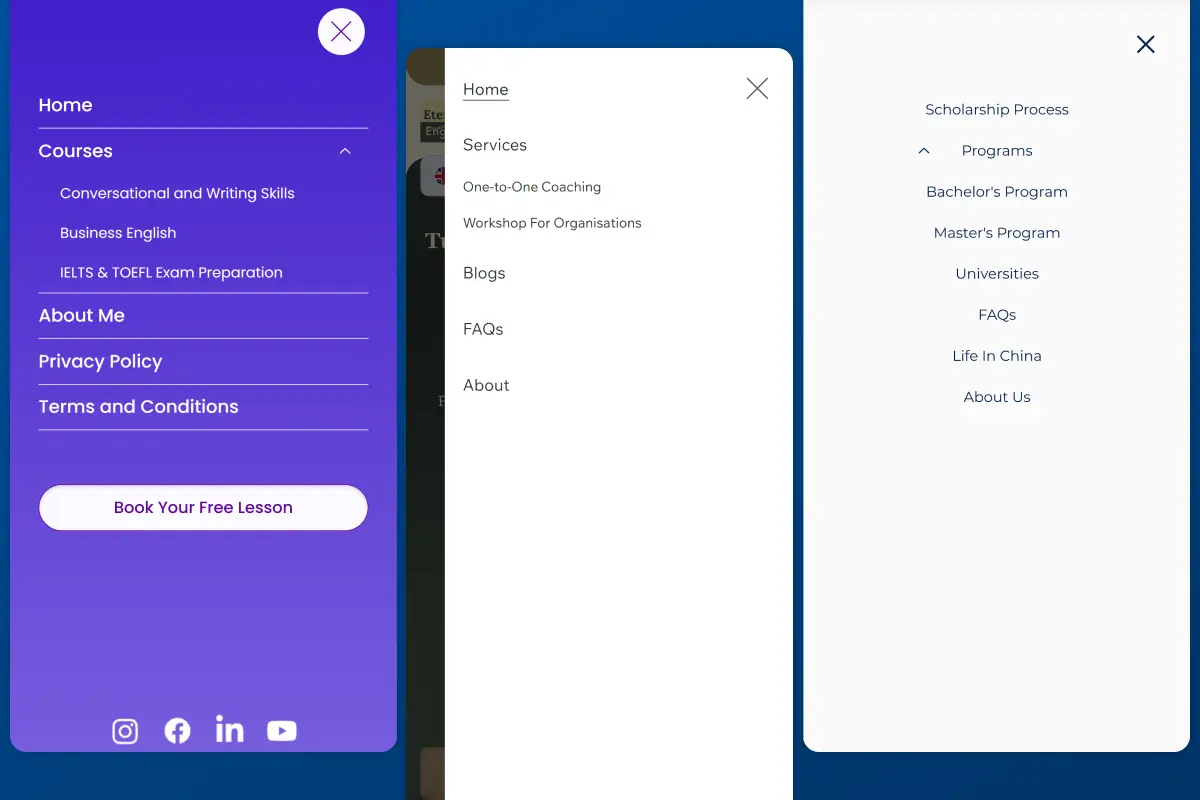
Recommended navigation structure with sequence:
- Home
- Services
- Service 1
- Service 2
- Testimonials/Case Studies/Success Stories
- Resources/Blogs
- Contact/Booking
No more than 5-6 items in your main menu. Too many choices overwhelm visitors. Every item competes for attention.
User flow to design for:
- Visitor lands on homepage
- Reads about services
- Sees social proof
- Lands on the booking page
- Converts
Every page should have a clear next step. Never leave a visitor with nowhere to go.
Common Mistakes with Tutoring Website Pages
1. Missing key pages
No About page means no trust. No clear Services page means confusion. No Booking page means lost leads. These are non-negotiable.
2. Poor CTAs or confusing navigation
"Learn More" is not a CTA. "Book a Free SAT Math Consultation" is. Vague language loses the visitor right at the moment of decision.
3. Ignoring SEO and internal linking
Every page needs a target keyword. Every page should link to related pages. Without this, you're invisible on Google and visitors hit dead ends on your site.
4. Trying to do everything on the homepage
Some tutors cram every service, every testimonial, every detail onto the homepage. The result is overwhelming and unfocused. Use individual pages for depth. Let the homepage direct traffic where it needs to go.
5. Launching before pages are ready
It's better to launch with 5 solid, complete pages than 10 half-built pages. Incomplete pages hurt both user experience and SEO.
Let’s Build Your Tutoring Business Website Together
Growing a tutoring business can feel overwhelming. Between designing your website, optimizing for SEO, managing content, and figuring out how to attract students, it's easy to get stuck in tasks that aren't your expertise.
That's exactly where Mabit Web Studio comes in. We specialize in helping online tutors like you grow your student base and build a strong digital presence by designing tutoring business websites that aren't just elegant - they're built to convert visitors into students.

Whether you're just starting out or ready to scale, we offer flexible service packages tailored to your budget and business goals. You won't need to juggle multiple freelancers or worry about piecing everything together - we handle the entire process for you:
- SEO Research - Keyword research and strategy to ensure your site ranks
- Website Copy - Conversion-focused copywriting that speaks to your ideal students
- Website Design & Development - Professional, mobile-responsive, fast-loading sites
- Post-Launch Strategies - Ongoing support with content, SEO, and marketing
Let us take the burden of website and marketing strategies off your shoulders so you can focus on what you do best: teaching and inspiring learners.
Conclusion
The pages on your tutoring website aren't just places to put information. They're steps in a journey that takes a visitor from "I just found this site" to "I'm booking a consultation."
When each page has a clear role, a clear message, and a clear next step, your website becomes your most effective student acquisition tool, working for you around the clock.
Key Takeaways:
- Page structure directly impacts user experience, SEO rankings, and conversions
- Core must-have pages: Homepage, Services, About, Booking, Testimonials, FAQ, Blog
- Your homepage is a guided journey, not a brochure
- Services pages should explain outcomes and transformation, not just list subjects
- About pages build trust through story, credentials, and personality
- Booking pages must be frictionless: simple form, scheduling link, trust signals nearby
- Testimonials and case studies are your highest-converting social proof elements
- Blog content builds authority and drives organic traffic over the long term
- FAQ pages remove objections and rank well on Google
- Optional power pages: location-based pages, case studies, resource guides, pricing
- Keep navigation simple (6-7 items max) and connect every page with internal links
- Never leave a visitor with no clear next step
Ready to go deeper? My comprehensive guide on How to Build a Website For Your Tutoring Business covers not just page structure, but the complete foundation, development, and post-launch strategy for a tutoring website that actually converts students.
And if building your tutoring business website feels overwhelming, or you'd rather focus on teaching while experts handle the website, Mabit Web Studio can help.
Schedule a free consultation call to discuss your website project. Let's build a website that brings you students consistently.