Top 10 Tutoring Website Mistakes That Cost You Students
After analyzing more than 100+ tutoring business websites in 2025, I realized that many tutors build elegant-looking sites but struggle with low traffic and poor conversion.
Some websites aren't bringing in visitors at all. Others have traffic but can't turn those visitors into paying students. The patterns are consistent. The same mistakes show up again and again and they're costing tutors thousands in lost revenue.
Hi, I am Abdur, founder of Mabit Web Studio. For the past three years, I've been helping education businesses grow with conversion-focused websites and effective marketing strategies.
In this article, I'll walk you through the 10 most critical mistakes (with a bonus at the end) tutors make when building their websites and the exact fixes that turn those mistakes into bookings.
Table of Contents
Why Tutoring Website Mistakes Cost You Students
Here's the actual reality of building a tutoring website:
No solid business foundation = no clear message = no bookings.
No SEO means = no organic visitors.
And poor copywriting = less trust = lower conversions.
Small mistakes compound fast. You launch your website. No traffic shows up because you skipped keyword research. The few visitors who do arrive don't understand what you offer because your copy is vague. They leave without booking. You assume websites don't work for tutors and give up.
The difference between "pretty" sites and "profitable" sites isn't design. It's strategy.
A beautiful website with no SEO, no clear value proposition, and no lead capture is just an expensive business card. A simple, strategically built website with the right foundations converts visitors into students, even if the design is basic.
Let's fix the mistakes before you make them.
Mistake 1: Missing a Solid Business Foundation
Most tutors skip straight to picking colors and fonts. They never define their WHY, their ideal student, or their unique selling proposition.
The result? A website that says "I'm a tutor" but doesn't say why a parent should choose you over the 50 other tutors on Google.
Why this kills conversions:
Without a clear foundation, your messaging is generic. "Professional tutoring services" could be anyone. Parents don't know what makes you different, so they keep searching.
The solution here:
Before you touch website design, build your business foundation. Define your WHY (your purpose), your ideal student profile, your unique selling proposition, and your core brand messaging.
This isn't optional. Your foundation determines every word on your website, every service you highlight, and every student you attract.
For a step-by-step guide on building your tutoring business foundation, you must read: How to Build a Foundation for Your Tutoring Business.
Download the Tutoring Business Foundation Checklist (36 questions) included in that guide to make sure you've covered everything before building your site.
Mistake 2: Prioritizing Design Over Conversion
Beautiful gradient backgrounds. Fancy animations. Complex layouts with 5 different font styles. None of that matters if visitors don't know what to do next.
Why this kills conversions:
Design catches attention for 5 seconds. Then visitors look for information. If your site is gorgeous but doesn't have clear CTAs, trust signals, or a simple booking flow, they leave.
Conversion isn't about aesthetics. It's about guiding visitors from landing on your site to booking a consultation.
The solution here is:
Design around the user journey: Awareness → Trust → Booking.
Every page needs a clear next step. Your homepage should guide visitors to your services page. Your services page should guide them to booking. Your about page should build trust and link back to services.
Focus on clarity first, beauty second. A clean, simple site with obvious CTAs will always outperform a stunning site with no clear path to action.
Mistake 3: Skipping SEO Keyword Research
You build pages based on what you think students search for. "Tutoring Services." "Online Lessons." "Expert Help." No one searches for those phrases.
Why this kills traffic:
Without keyword research, you're guessing. You create pages targeting keywords with zero search volume. Your site doesn't rank for anything relevant. No one finds you on Google. Your only traffic comes from people who already know you.
The fix here is:
Do keyword research before you write a single page. Find out what parents and students actually type into Google when looking for tutors.
Target specific, high-intent keywords like "SAT math tutor near me," "online chemistry tutor," or "algebra help for struggling students."
Every page should target a specific keyword. Homepage: your main service + location. Services pages: individual subject keywords. Blog posts: question-based long-tail keywords.
For a complete SEO guide for tutoring businesses, including keyword research, on-page optimization, and ranking strategies, you must check out my guide on SEO for Tutoring Businesses.
Be sure to also check out my tutoring website building guide, which covers SEO keyword research in detail with step-by-step video explanations.
Mistake 4: Missing Must-Have Pages
Your website has a homepage and a contact form. That's it.
No services page. No about page. No testimonials. No FAQ.
Why this kills conversions:
Visitors have questions. If your website doesn't answer them, they leave and book someone else who does.
Parents want to know: What do you teach? Who are you? What results have other students gotten? How do I book?
If those answers aren't clearly presented on dedicated pages, you lose the booking.
The solution here is simple:
Every tutoring website needs these core pages:
- Homepage (your main conversion hub)
- Services page (clear explanation of what you offer)
- About page (build trust through your story and credentials)
- Booking page (frictionless contact and scheduling)
- Testimonials page (social proof that converts)
- FAQ page (remove objections before they stop bookings)
- Blog (SEO traffic and authority building)
Each page has a specific job. Missing one breaks the visitor journey.
For a complete breakdown of what each page needs and how to structure them, check out this short article: Must-Have Website Pages for Your Tutoring Business.
Mistake 5: Weak Copy That Doesn't Convert
Your homepage says: "Welcome to my website! I'm a professional english tutor offering quality tutoring."
That could be anyone. It says nothing about outcomes, pain points, or why a parent should trust you.
Why this kills conversions:
Generic copy doesn't build trust. It doesn't address the parent's real concern: "Will this tutor actually help my child improve?"
Copy is what communicates your value. If your copy is vague, boring, or focused on you instead of the student's results, conversions tank.
The solution here is:
Write copy based on what your audience needs, not what sounds professional.
Here is an example:
- Generic: "Professional SAT tutoring services"
- Personalized: "Help your child raise their SAT score by 100+ points in 8 weeks"
Address real pain points: "Is your child struggling with algebra and losing confidence?" Then position yourself as the solution: "I specialize in helping students go from confused to confident in just 6 weeks."
Every page should be optimized for SEO and written for humans. Include your target keywords naturally, but prioritize clarity and conversion over keyword density.
Mistake 6: Poor Technical Performance
Your website takes 8 seconds to load on mobile. It's not responsive. You don't have HTTPS.
Google tanks your rankings. Parents leave before your site even finishes loading.
Why this kills traffic and conversions:
Google prioritizes fast, mobile-friendly, secure sites. If your site fails on any of these, you won't rank, even if your content is great.
And if a parent does find you, a slow site on their phone means they hit the back button immediately. You lost a booking before they even saw your services.
The solution here is:
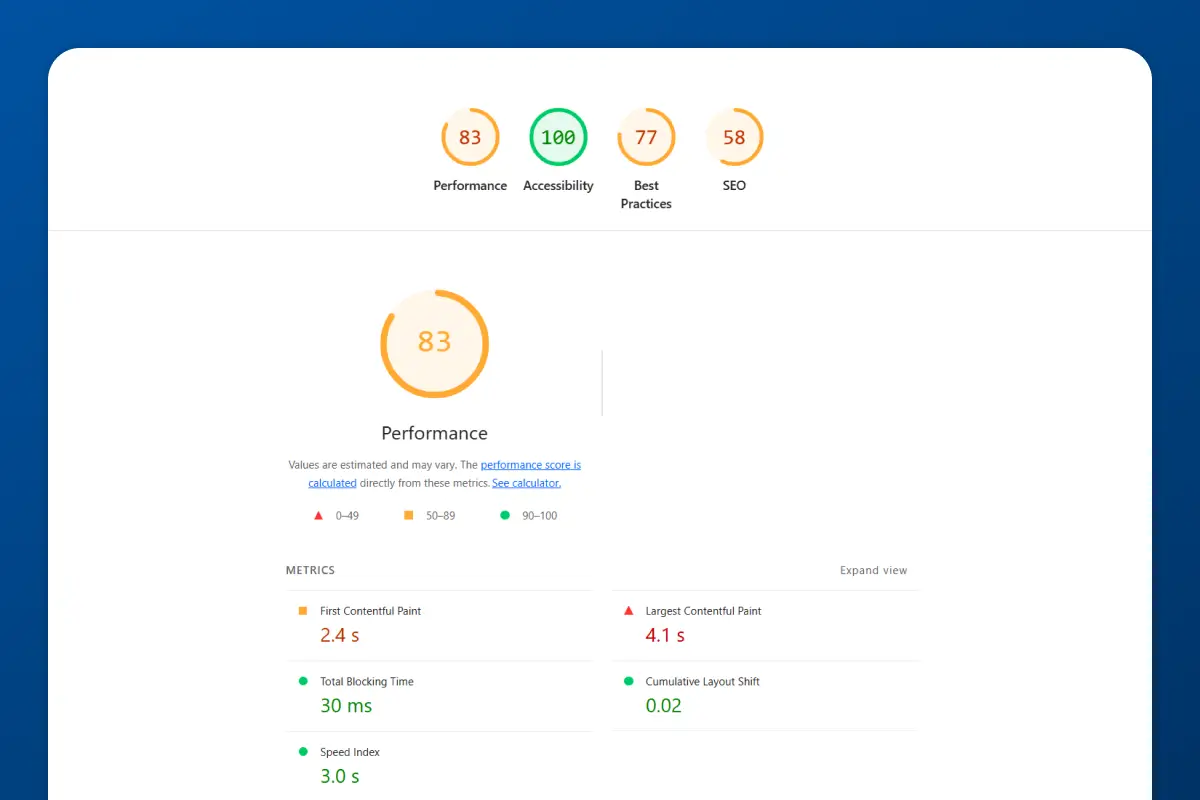
1. Test your site speed with Google PageSpeed Insights. Aim for a score of 80+ on mobile. Compress images, minimize plugins, use fast hosting.
2. Mobile-first design. Over 60% of traffic is mobile. If your site doesn't work perfectly on a phone, you're losing most of your visitors.
3. HTTPS is non-negotiable. Google requires it. Browsers warn users about non-secure sites. Get an SSL certificate (most hosting providers include it free).
4. Set up Google Search Console and submit your XML sitemap. This tells Google your site exists and helps you track rankings and traffic.
Mistake 7: No Lead Capture System or Sales Funnel
Visitors land on your site. They read your services. They think "I'll come back later." They never come back.
Why this kills conversions:
Most people aren't ready to book on the first visit. If you don't capture their contact info, you have no way to follow up. They're gone forever.
The solution is simple:
Add a lead magnet: a free resource in exchange for an email address. A study guide. A quiz. A mini-course. Something valuable that gets them into your funnel.
Use popups (timed or exit-intent), embedded forms in blog posts and service pages, and dedicated landing pages for each lead magnet.
Once you have their email, nurture them with helpful content, build trust, and guide them toward booking.
A complete sales funnel turns cold visitors into warm leads into paying students over time.
For a step-by-step guide on building a sales funnel for your tutoring business, you must read: How to Build a Sales Funnel for Your Education Business.
Mistake 8: Overcomplicating With Too Many Tools
15 plugins. 3 different email marketing platforms. 2 CRMs. 5 analytics tools.
Your site is slow. You're paying for tools you don't use. You can't figure out which tool does what.
Why this kills performance and efficiency:
Every plugin slows your site. Too many tools create confusion and make management impossible. You waste time troubleshooting tech instead of teaching students.
The solution is straightforward:
Start with 3-5 core tools and expand only when you actually need more.
Essentials:
- Scheduling: Calendly or Acuity Scheduling
- Email marketing: Mailchimp or ConvertKit
- Analytics: Google Analytics and Search Console
- Payment processing: Stripe or PayPal
- Video conferencing: Zoom or Google Meet
That's it to start. Add tools only when a specific need arises, don't install "just in case."
Mistake 9: Choosing the Wrong Website Platform
You picked Squarespace because it looked easy. Or you're using a tutoring-specific platform that locks you in with poor SEO and zero customization.
Why this kills long-term growth:
Some platforms have weak SEO (Wix, Squarespace). Some trap you with restrictive features and force you to pay their developers for basic updates (YoCoach).
Some are just not built for serious businesses. The platform you choose affects your SEO, scalability, and ownership.
Choose the right platform based on your needs and long-term goals.
Here are the best options:
- WordPress (.org): Best for SEO, control, and scalability
- Webflow: Best for design freedom and professional look
- Teachable/Kajabi: Best if you're adding courses
What to avoid:
Wix and Squarespace for serious tutoring businesses. Tutoring-specific platforms with poor SEO and developer lock-in.
Note: Wix still can work for solo tutors.
For a complete platform comparison, including pros, cons, pricing, and who each platform suits best, check out my article: Best Website Builder for Tutoring Business.
Mistake 10: Launching Without Testing
You hit publish. A parent tries to book. The form is broken. They leave.
You check your site on mobile. Half the images are missing. The text is unreadable.
Why this kills conversions:
Launch day is your first impression. Broken forms, 404 errors, slow loading, or mobile issues destroy trust immediately. Parents won't give you a second chance.
Use a pre-launch checklist before you go live:
- Test every form (contact, booking, lead magnet)
- Check mobile responsiveness on multiple devices
- Test site speed with Google PageSpeed Insights
- Click every internal and external link (no 404s)
- Verify images load correctly on all pages
- Set up Google Analytics and Search Console
- Check that your SSL certificate is active (HTTPS)
- Test the booking flow from landing to confirmation
A 2-hour testing session before launch prevents weeks of lost bookings.
Bonus Mistake: No Post-Launch Strategy
You build the website. You launch it. You wait for students to magically appear. They don't.
A website alone doesn't bring students. You need traffic. Traffic comes from SEO, content marketing, social media, backlinks, and consistent promotion.
Most tutors build a site and do nothing else. No blog posts. No marketing. No outreach. The site sits there generating zero bookings because no one knows it exists.
That’s why you must have a post-launch strategy before you launch.
Long-term strategies:
- Publish 2-4 SEO-optimized blog articles per month
- Build backlinks from education sites and directories
- Optimize your Google Business Profile (if local)
- Share content on social media consistently
Short-term strategies:
- Run Google Ads or Facebook ads for immediate visibility
- Reach out to local schools and parent groups
- Offer a launch promotion or free consultation
- Ask existing students for testimonials and referrals
Your website is the foundation. Marketing is what brings students to it.
For complete post-launch strategies, including SEO, content marketing, backlinks, and paid advertising, read the Phase 3 section of: How to Build a Website For Your Tutoring Business.
Download Your Free Website Launch Checklist
Building a tutoring website is complex. There are dozens of steps across foundation, design, technical setup, and post-launch marketing.
That's why I created a complete Website Launch Checklist that walks you through every step, from building your foundation to launching and promoting your site.
The checklist ensures you don't miss any critical steps and helps you launch a site that actually converts from day one.
How Mabit Web Studio Can Help
Avoiding these mistakes sounds simple in theory. But in practice, building a tutoring website that converts requires expertise across business strategy, SEO, copywriting, design, and technical setup.

At Mabit Web Studio, we specialize in building conversion-focused websites for online tutors and education businesses. We handle everything, from foundation strategy to website design to post-launch SEO, so you can focus on teaching while we build the infrastructure that brings you students.
Schedule a free consultation to discuss your tutoring website project and see how we can help you avoid these costly mistakes.
Conclusion
Most tutoring websites fail not because tutors aren't good at teaching but because they skip the foundations, ignore SEO, write weak copy, and launch without a strategy.
Every mistake on this list is fixable. And every fix compounds. Better SEO = more traffic. Better copy = more conversions. Better lead capture = more students over time.
Key Takeaways:
- Missing business foundation = generic messaging that doesn't convert
- Design without conversion strategy = pretty site, no bookings
- No SEO keyword research = invisible site, zero organic traffic
- Missing must-have pages = visitors can't find the info they need
- Weak copy = no trust, no differentiation, no conversions
- Poor technical performance = Google won't rank you, visitors leave immediately
- No lead capture = visitors browse once and disappear forever
- Too many tools = slow site, confusing management, wasted money
- Wrong platform = poor SEO, limited control, future migration headaches
- Launching without testing = broken forms, lost bookings, ruined first impressions
- No post-launch strategy = beautiful website with zero traffic
For the complete, step-by-step guide to building a tutoring website that avoids all these mistakes and actually converts students, you must read my complete guide on How to Build a Website For Your Tutoring Business.